Bagels Recipe | Homemade, Chewy & Golden
This bagels recipe uses a firm yeast dough, bread flour, barley malt syrup, a short water bath and a hot oven to produce the texture associated with a classic bagel, which is a golden exterior with a pleasantly chewy center.

Making bagels from scratch takes more steps than making ordinary rolls, but each step has a purpose.
The key is understanding that bagels are not simply bread dough shaped into rings. The stiff dough develops structure, while boiling the shaped dough sets the outer surface before baking.
Why You'll Love These Homemade Bagels
- Chewy center with a golden, slightly crisp exterior.
- Made completely from scratch.
- Boiling gives the bagels their defining exterior texture.
- Barley malt syrup adds subtle depth.
- Customizable with sesame, poppy, everything seasoning or coarse salt.
- Freezer-friendly for future breakfasts.
What Makes a Bagel Different From Bread?
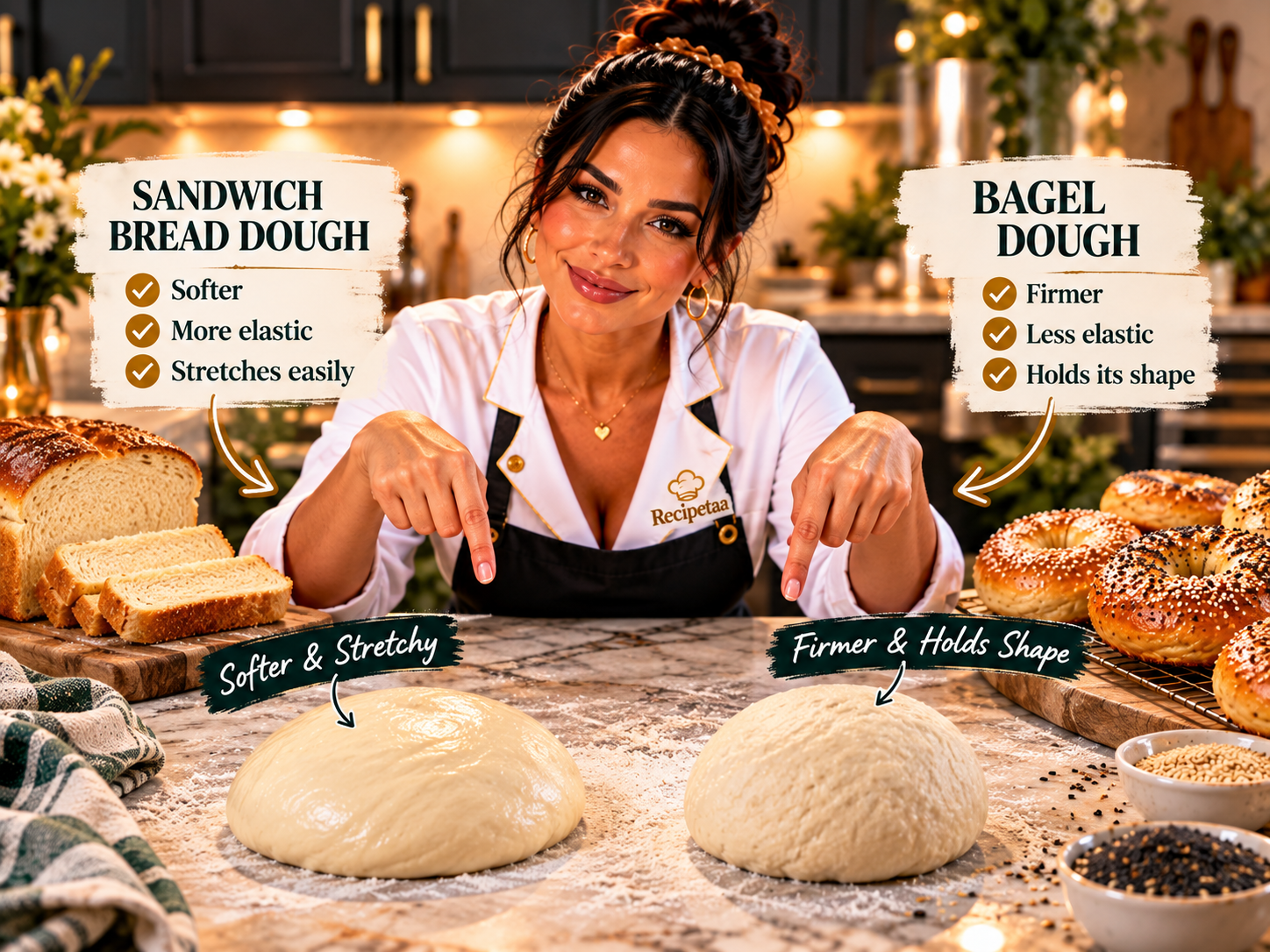
A classic bagel has a noticeably firmer dough and is boiled before baking.
Kneading develops gluten, shaping creates the ring, and the water bath sets the surface before the oven develops the crust.
This combination produces the characteristic chew and firm exterior.
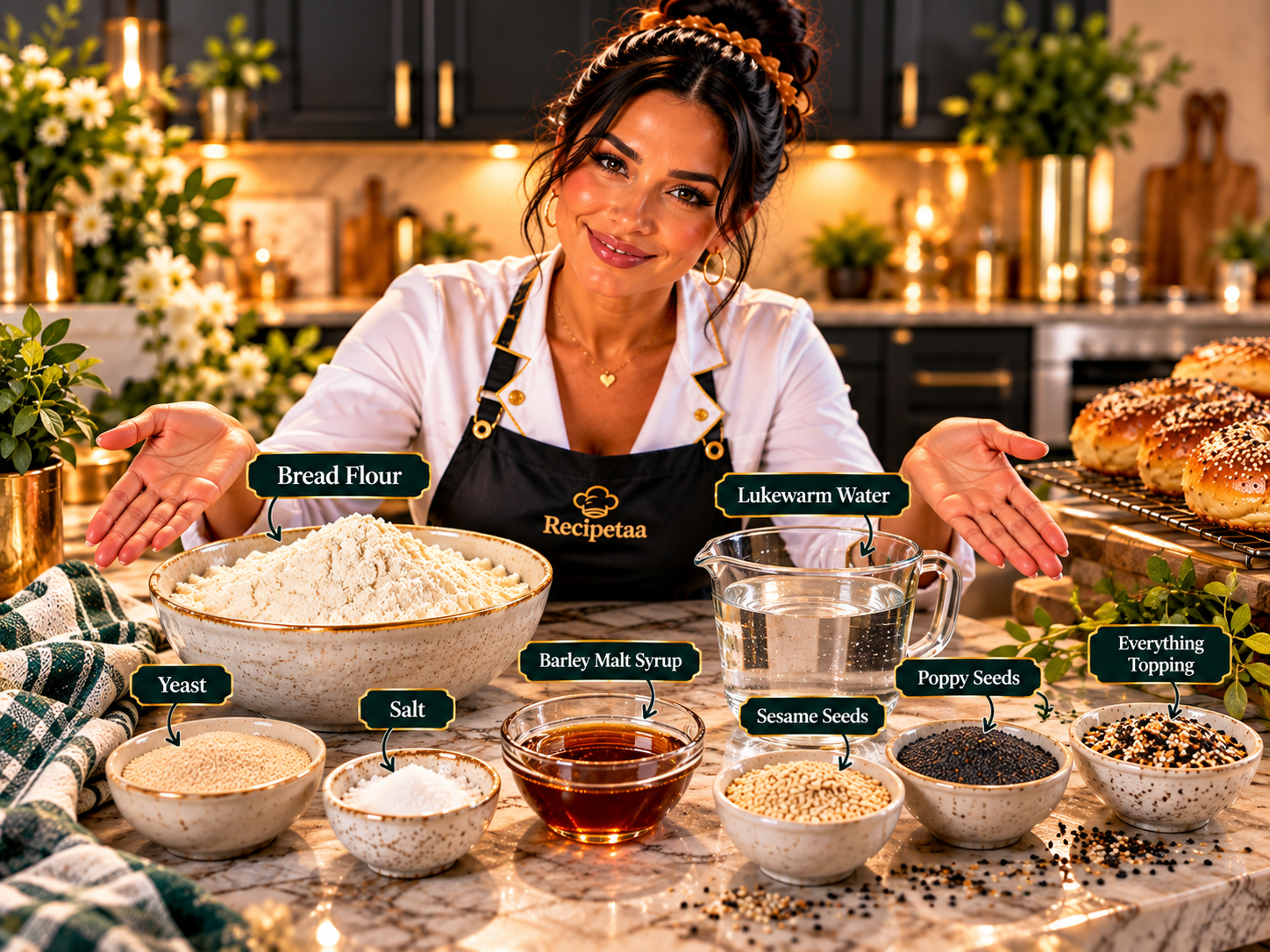
Ingredients You'll Need
Bread Flour
Bread flour is the choice here because its higher protein content supports the gluten development needed for chew.
Yeast
Instant yeast keeps the dough process straightforward, while active dry yeast can also be used.
Barley Malt Syrup
It adds subtle malty sweetness and is commonly used in traditional-style bagel doughs and water baths. Brown sugar is a practical substitute.
Salt
Salt strengthens flavor and balances the malt's mild sweetness.
Water
Use lukewarm water rather than hot water so the yeast remains active.
How to Make Bagels From Scratch
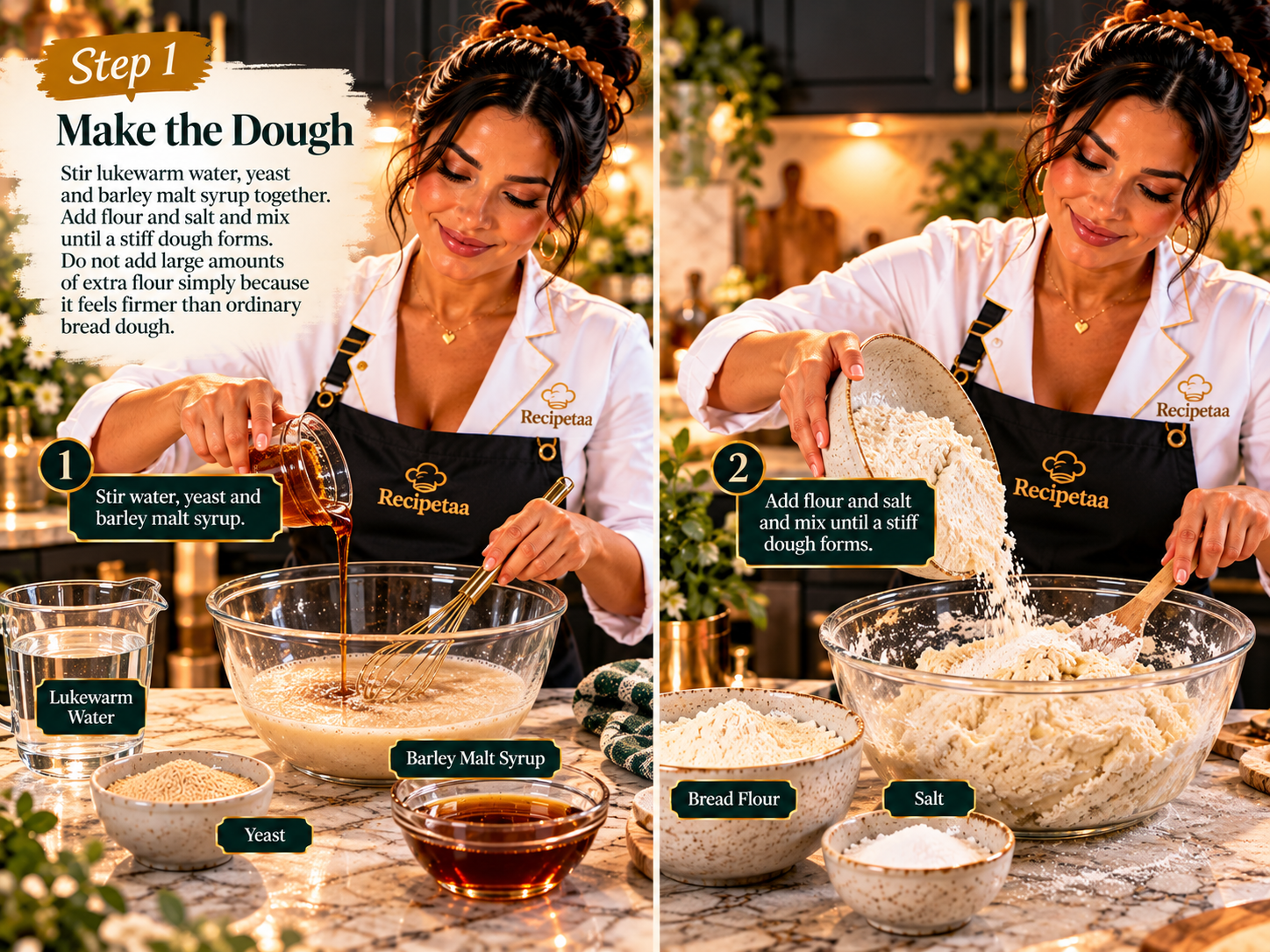
Step 1: Make the Dough
Stir lukewarm water, yeast and barley malt syrup together. Add flour and salt and mix until a stiff dough forms.
Do not add large amounts of extra flour simply because it feels firmer than ordinary bread dough.
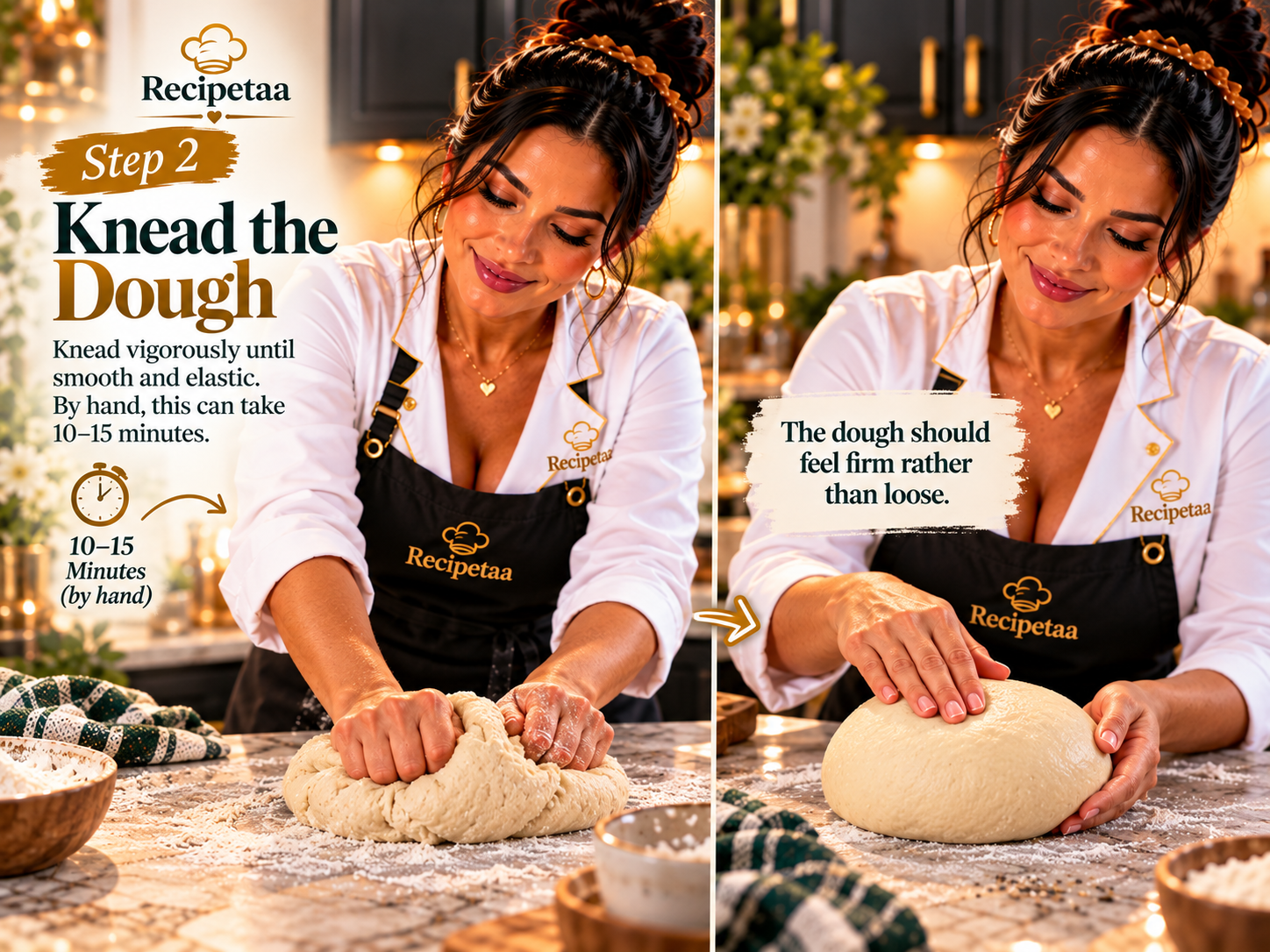
Step 2: Knead
Knead vigorously until smooth and elastic. By hand, this can take 10–15 minutes. The dough should feel firm rather than loose.
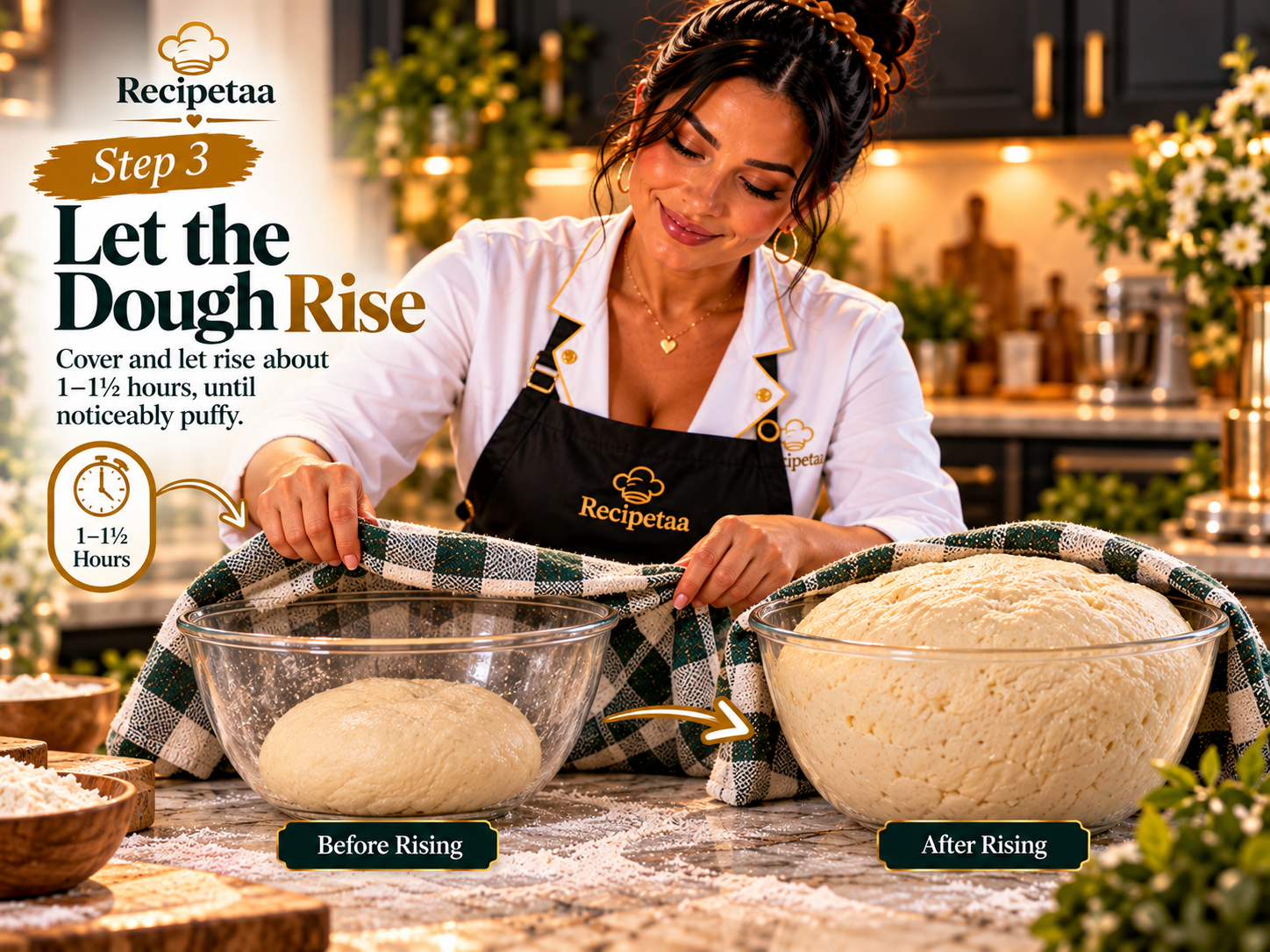
Step 3: First Rise
Cover and let rise about 1–1½ hours, until noticeably puffy.
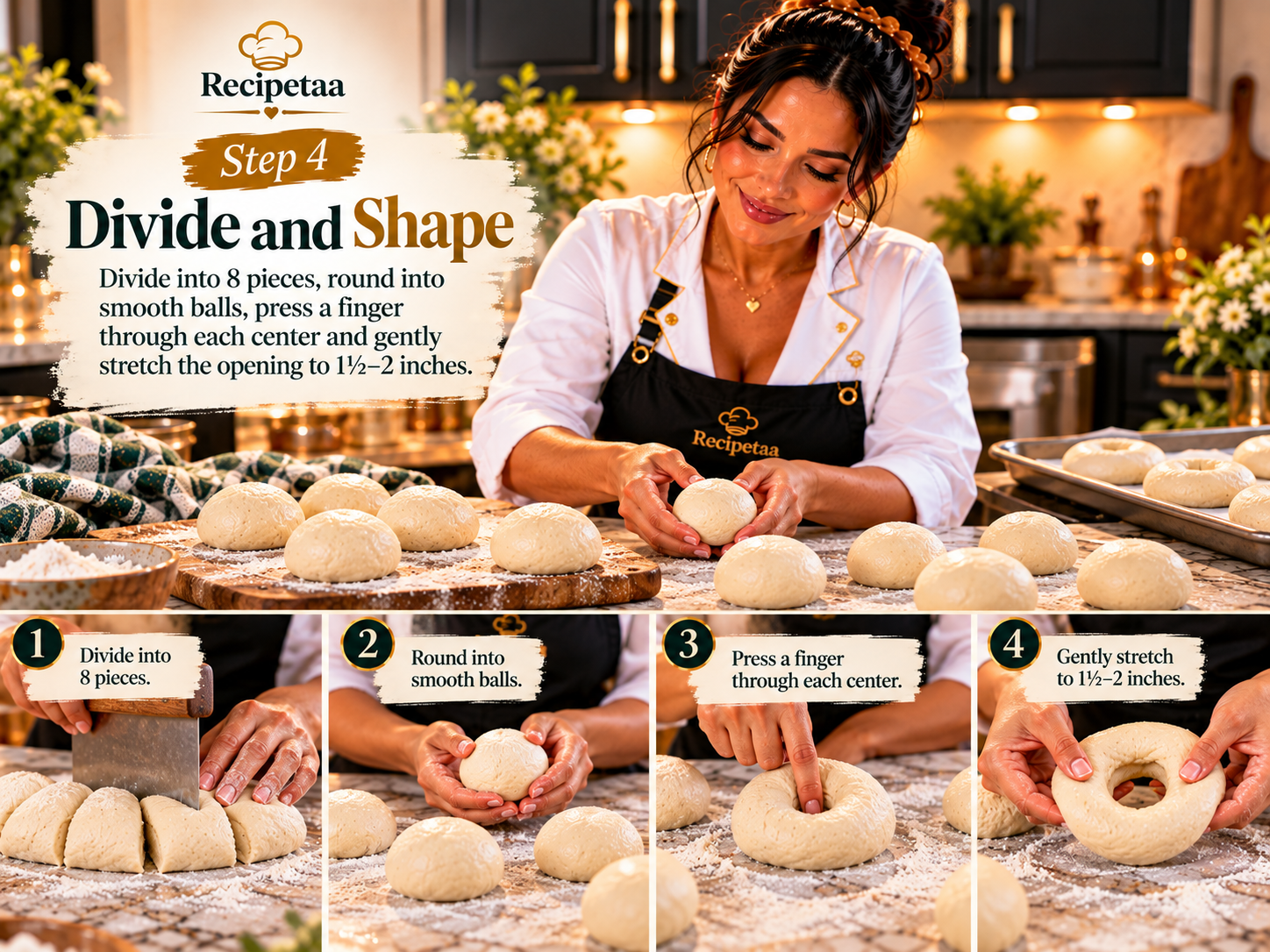
Step 4: Divide and Shape
Divide into 8 pieces, round into smooth balls, press a finger through each center and gently stretch the opening to 1½–2 inches.
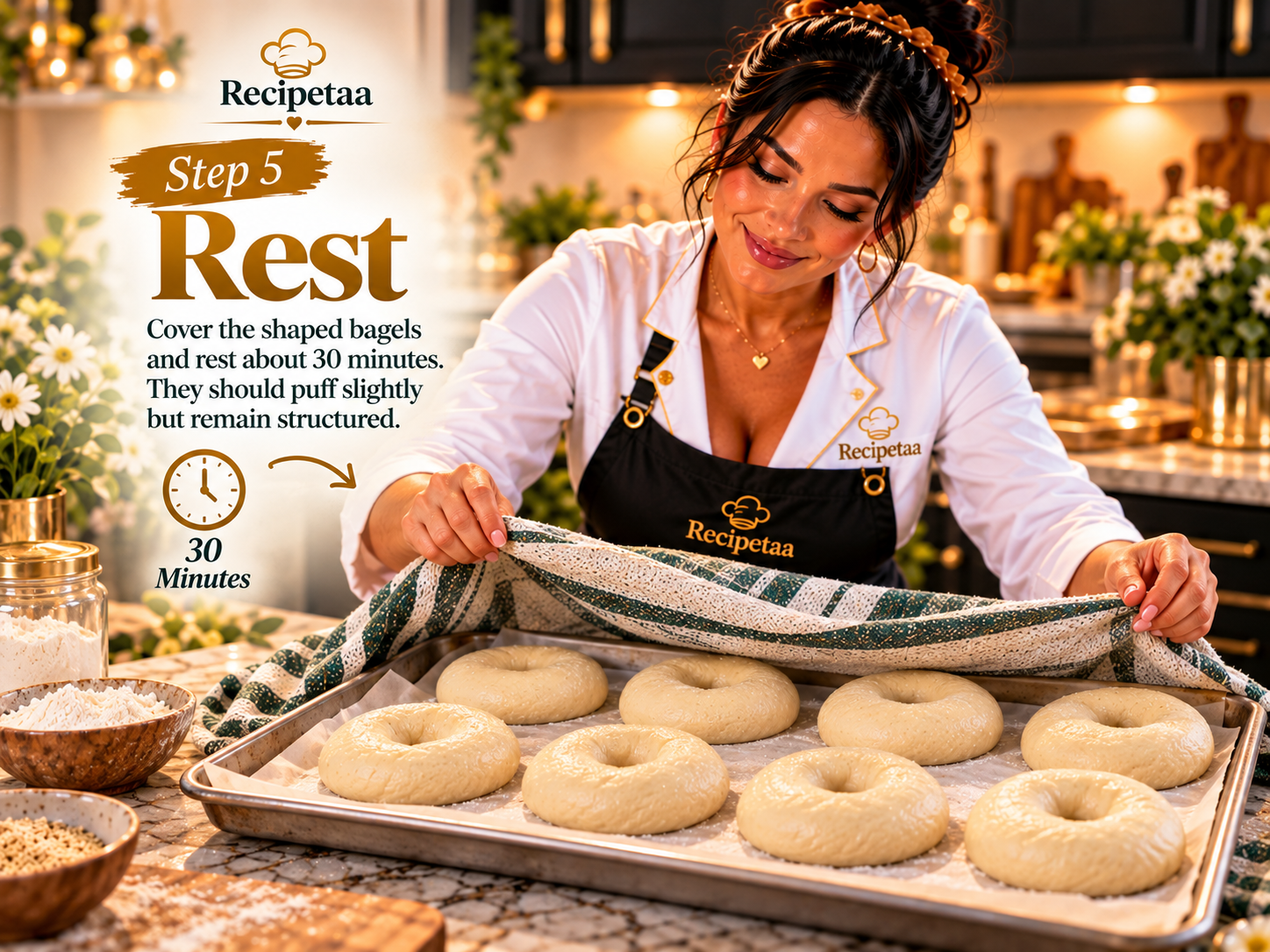
Step 5: Rest
Cover the shaped bagels and rest about 30 minutes. They should puff slightly but remain structured.
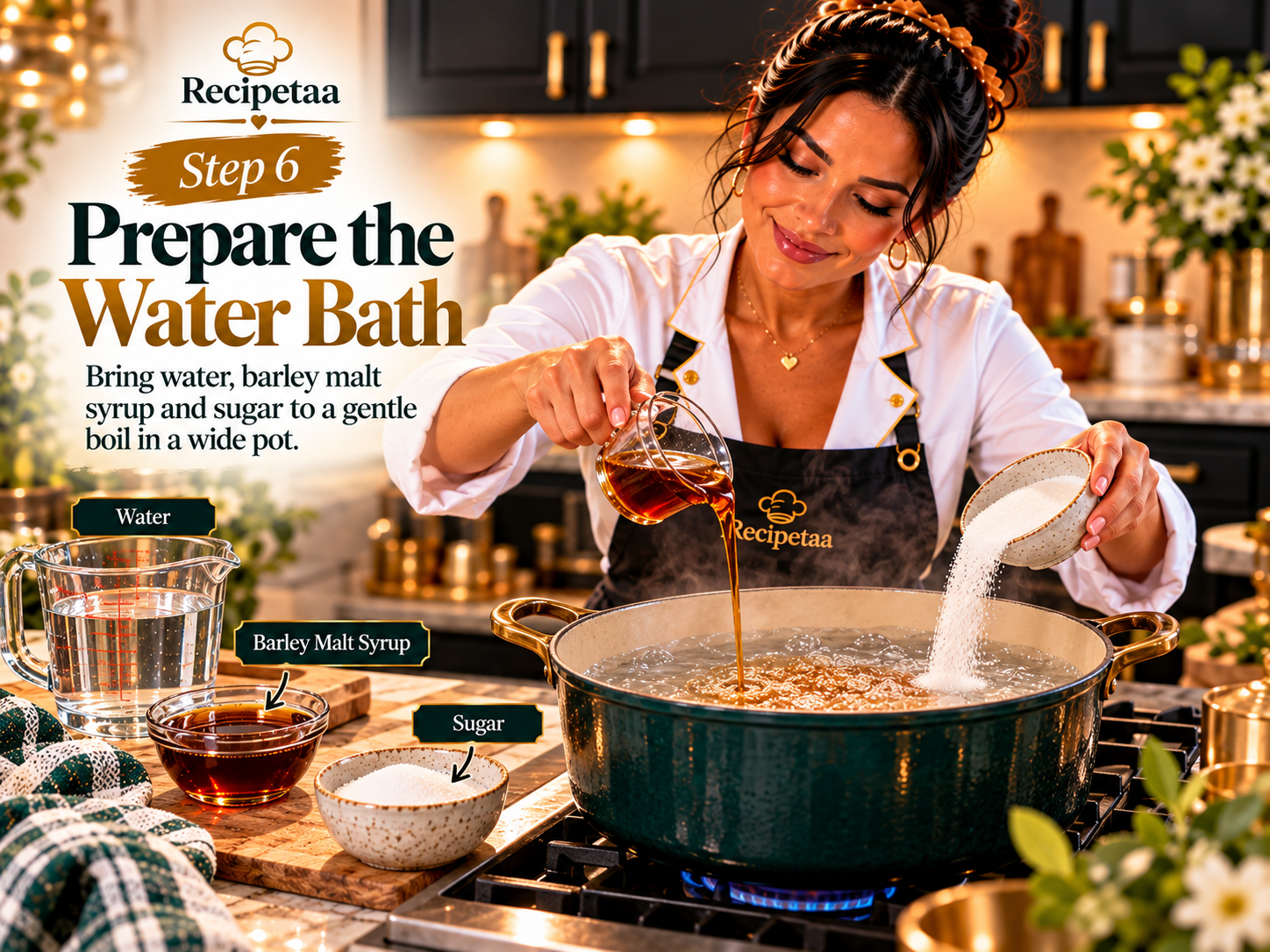
Step 6: Prepare the Water Bath
Bring water, barley malt syrup and sugar to a gentle boil in a wide pot.
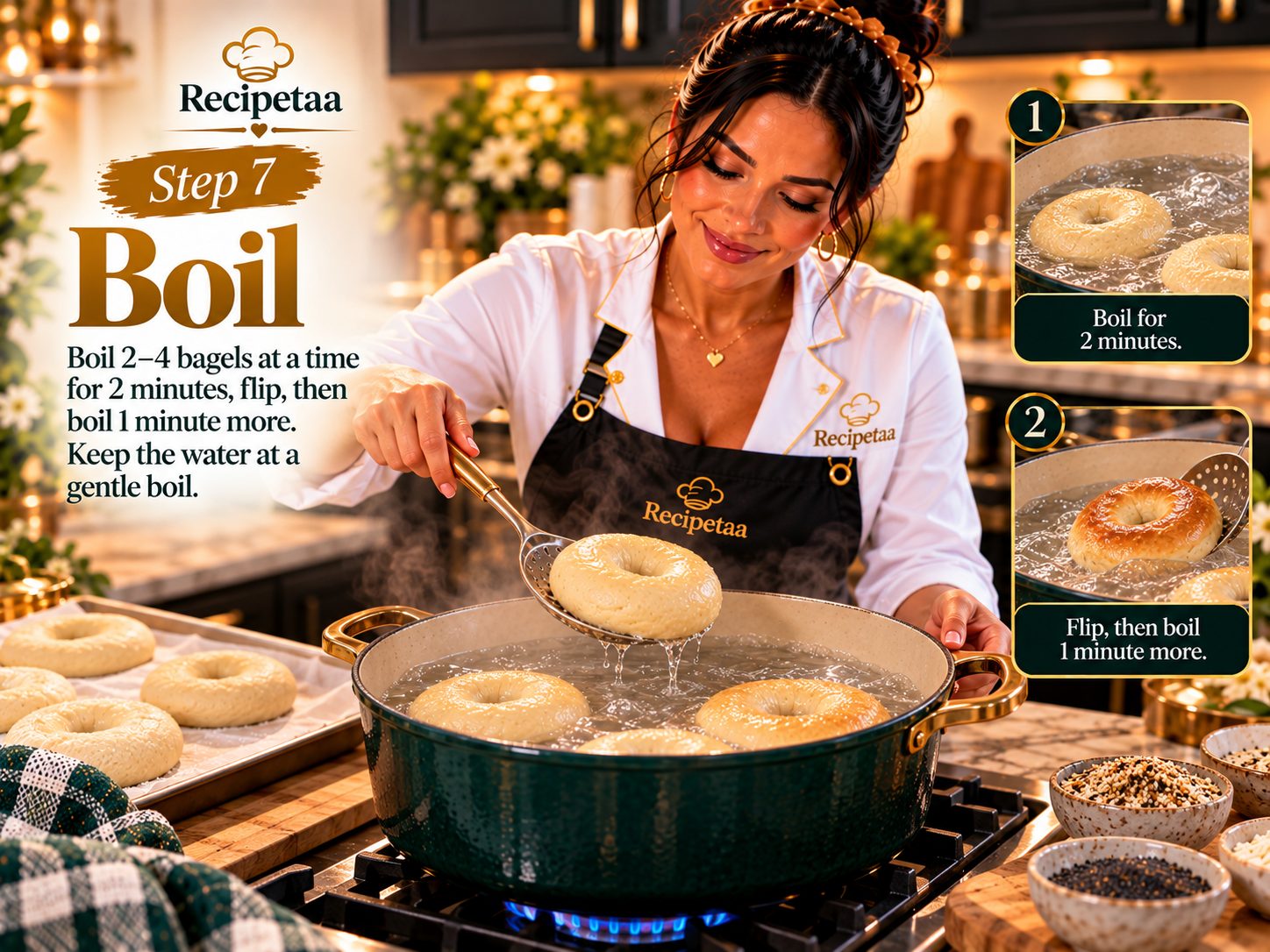
Step 7: Boil
Boil 2–4 bagels at a time for 2 minutes, flip, then boil 1 minute more. Keep the water at a gentle boil.
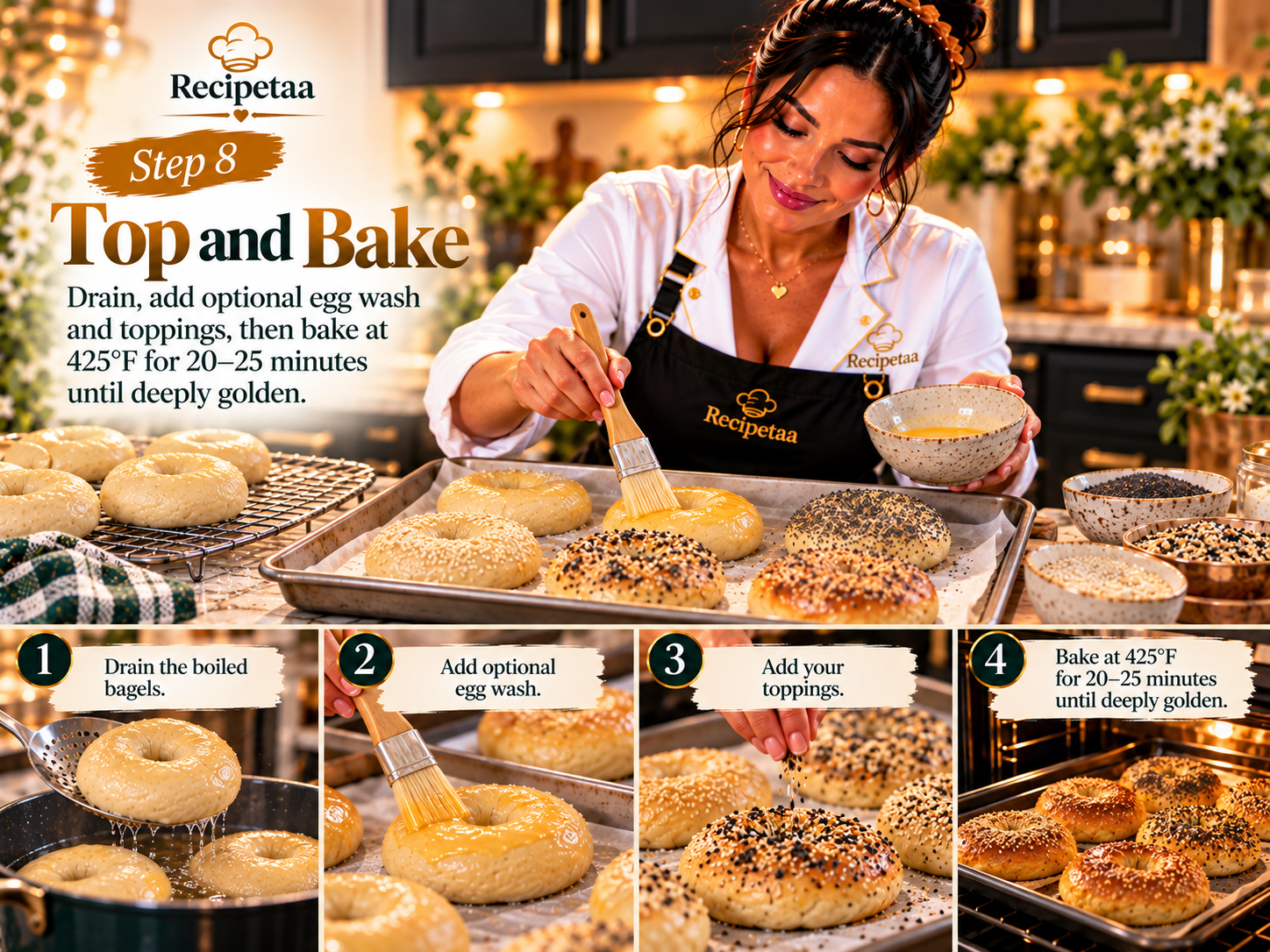
Step 8: Top and Bake
Drain, add optional egg wash and toppings, then bake at 425°F for 20–25 minutes until deeply golden.
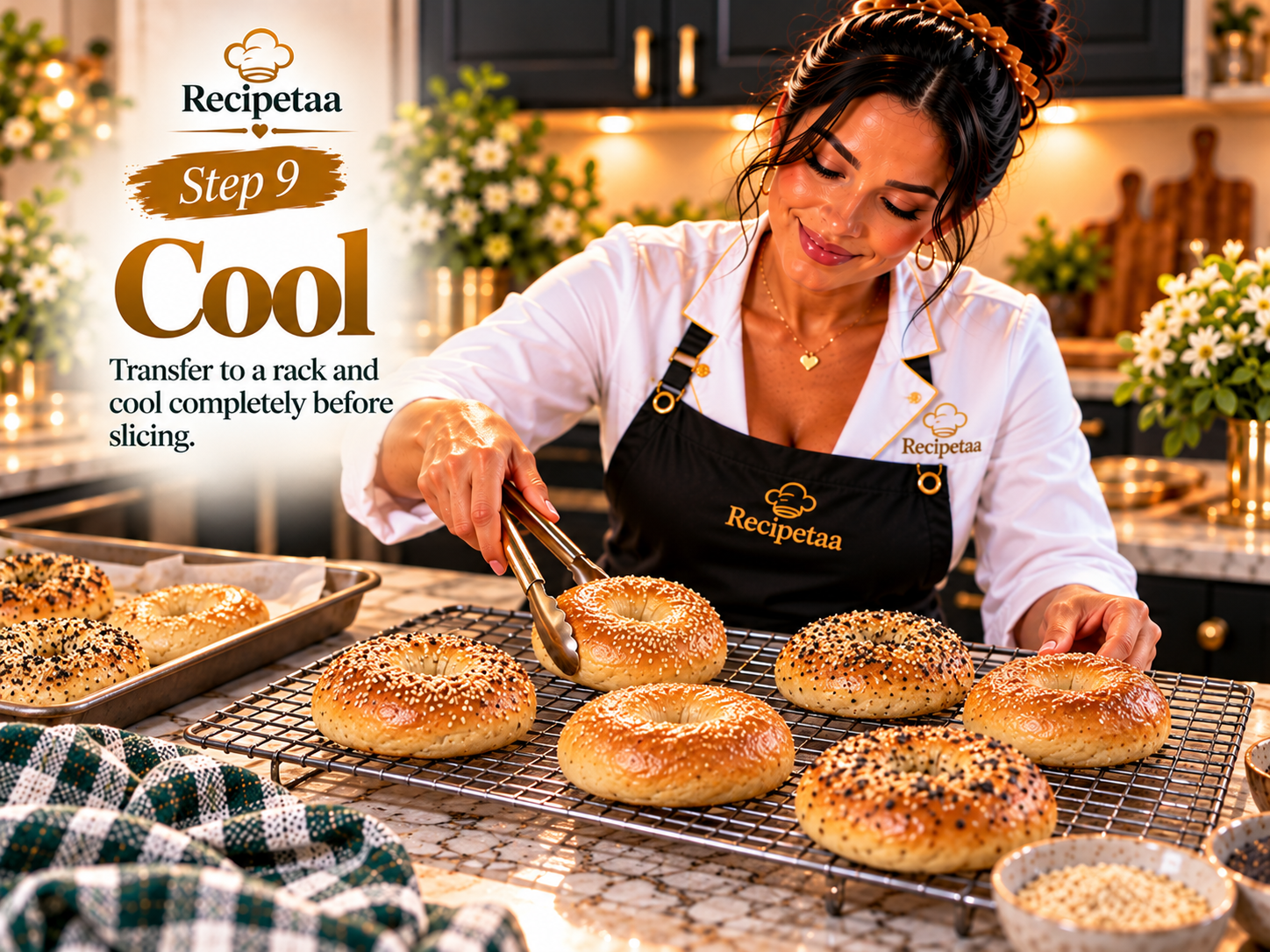
Step 9: Cool
Transfer to a rack and cool completely before slicing.
Why Do You Boil Bagels Before Baking?
Boiling is the defining technique that separates a classic bagel from an ordinary bread roll.
The hot water quickly sets the surface of the dough, limiting oven expansion and helping create the chewy interior and firmer crust.
Boiling times vary between recipes. For this recipe, the 2-minute-plus-1-minute bath gives the dough enough surface cooking while keeping the bagels practical to handle.
How to Get Chewy Homemade Bagels
- Use bread flour for strong gluten structure.
- Keep the dough firm rather than soft and sticky.
- Knead thoroughly until smooth and elastic.
- Do not over-proof the shaped bagels.
- Boil before baking.
- Bake until deeply golden.
The chew comes from the whole process, which involves flour strength, gluten development, firm dough, boiling and baking.
Troubleshooting Homemade Bagels
Why Are My Bagels Flat?
Over-proofing, weak dough structure, overly soft dough or rough handling can contribute to flat bagels.
Why Aren't My Bagels Chewy?
Check flour protein, dough firmness, kneading, proofing and whether the bagels received the full water bath.
Why Are My Bagels Too Dense?
Some density is normal, but excessive density can come from under-proofing, insufficient kneading, inactive yeast or excessive flour.
Why Did My Bagels Collapse?
Over-proofing, rough handling or weak gluten development can cause the shaped dough to lose structure.
Why Didn't My Bagels Get Shiny?
A malt-sweetened water bath contributes to surface character, while optional egg wash can increase gloss.
Why Is My Bagel Crust Too Hard?
Overbaking, very small bagels or an oven running hot can produce an excessively hard crust.
What Flour Is Best for Bagels?
Bread flour is the preferred choice here because its higher protein level supports the gluten structure needed for a chewy bagel.
All-purpose flour can work, but the result depends on the protein level of the specific flour.
Can You Make Bagels Without Malt Syrup?
Yes. Brown sugar is a practical substitute in the dough, and sugar can be used in the water bath. The flavor will be somewhat different from bagels made with barley malt syrup.
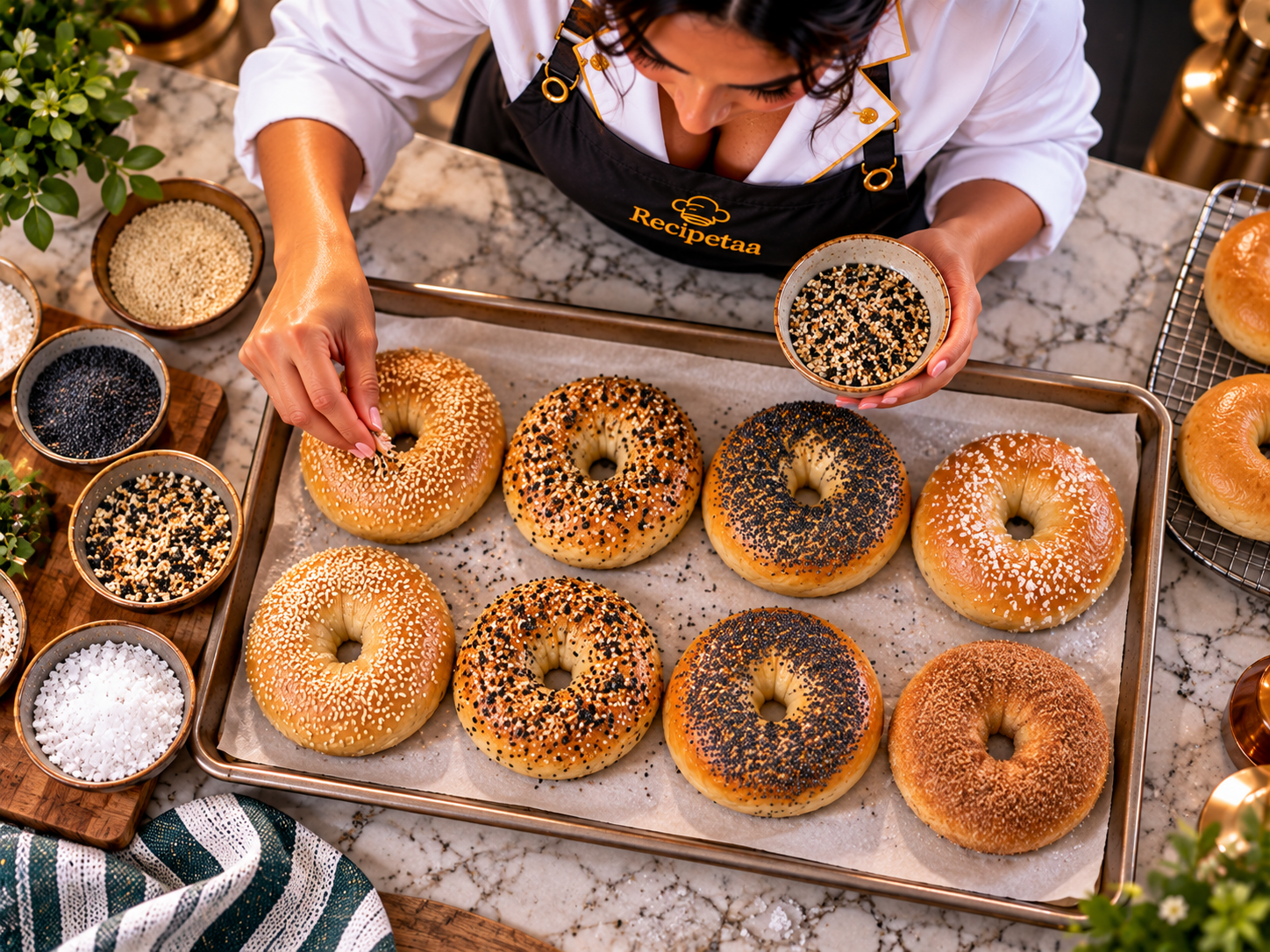
Topping Ideas
- Sesame seeds
- Poppy seeds
- Everything bagel seasoning
- Coarse salt
- Cinnamon sugar
Serving Ideas
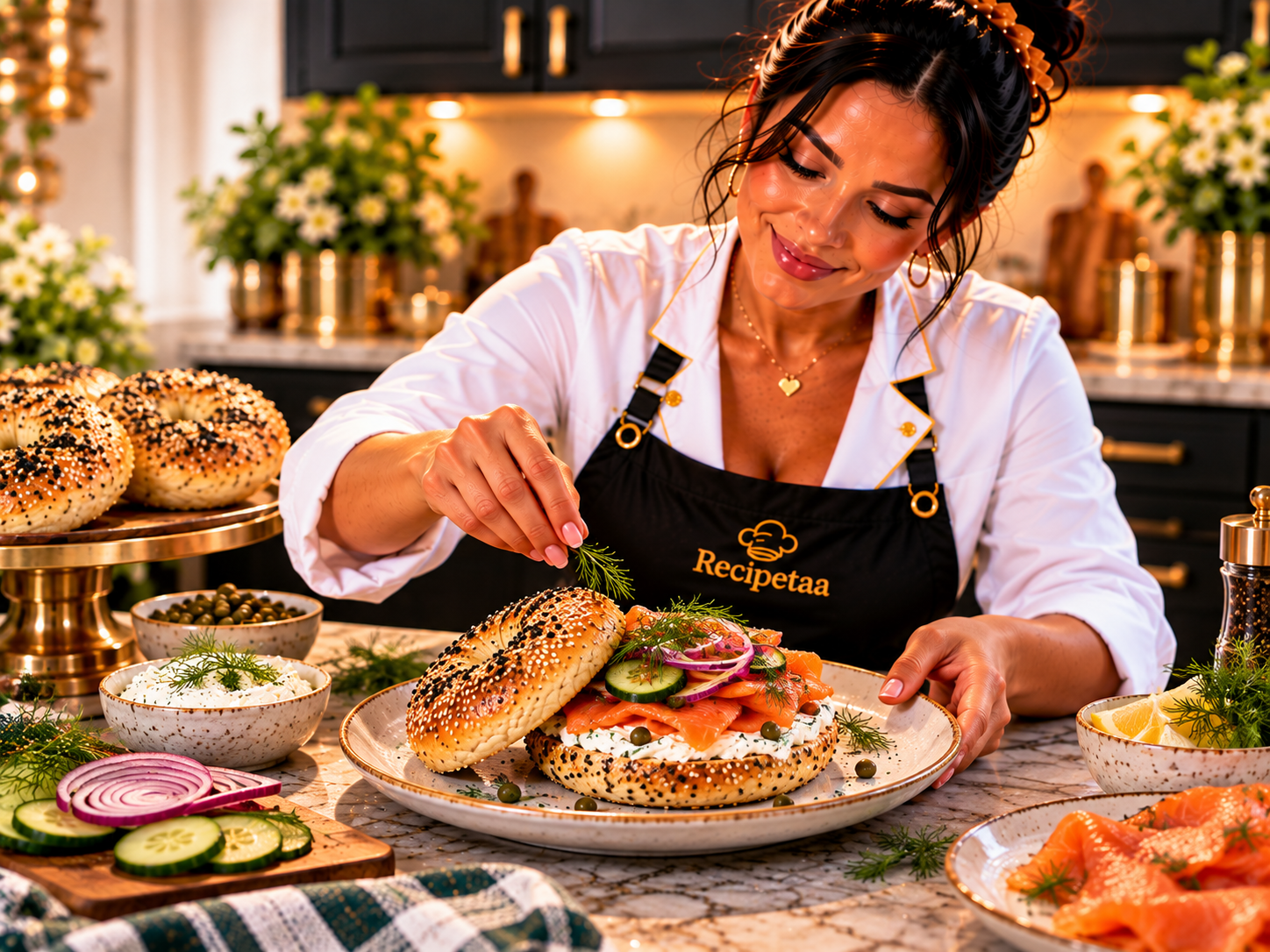
- Cream cheese and smoked salmon
- Butter and jam
- Egg and cheese breakfast sandwiches
- Avocado and tomato
- Peanut butter and banana
- Turkey and cheese
Storage, Freezing & Reheating
Bagels are best fresh. Once completely cool, keep them tightly wrapped or sealed for short-term storage. If they will not be eaten within a day or two, freezing is preferable.
To freeze, slice the cooled bagels before wrapping them well and freezing for up to about 2–3 months for best quality. Toast directly from frozen or after thawing.
For a whole bagel, warm it briefly in a moderate oven, then slice and toast as desired.
Final Word
Good homemade bagels are made through technique rather than shortcuts.
Keep the dough firm, give it enough time to develop, shape the rings gently, and treat the water bath as an essential step.
Once deeply golden and cool enough to slice, the finished bagels should give you the contrast that makes a bagel so satisfying, having a firm exterior and a chewy center.
Frequently Asked Questions
How do you make bagels from scratch?
Make a stiff yeast dough, knead it, let it rise, divide and shape it, rest the rings, boil them briefly, add toppings and bake.
What makes a bagel chewy?
Strong flour, firm dough, thorough gluten development, boiling and proper baking all contribute to chew.
Why do you boil bagels before baking?
Boiling sets the outer surface and limits expansion, helping create the characteristic chewy interior.
What flour is best for bagels?
Bread flour is a strong choice because its protein content supports gluten development.
Can I use all-purpose flour?
Yes, but texture can vary. Bread flour is the preferred choice here.
What does malt syrup do in bagels?
It contributes subtle malty sweetness and is commonly used in bagel dough and water baths.
How long should I boil bagels?
For this recipe, 2 minutes on one side and 1 minute after flipping. Different recipes use different times.
Why are my bagels flat?
Check final proofing, dough strength, hydration and handling.
Why are my bagels dense?
Check yeast activity, fermentation, kneading and flour quantity.
Why aren't my bagels chewy?
Use strong flour, maintain a firm dough, knead thoroughly and do not skip boiling.
Can homemade bagels be frozen?
Yes. Slice before freezing for easier toasting later.
What are the best toppings?
Sesame, poppy, everything seasoning and coarse salt are classic choices, while cinnamon sugar works for a sweet variation.
Bagels Recipe
Chewy homemade bagels with a golden, slightly crisp exterior and soft centre, made from firm yeast dough that is shaped, boiled, and baked.
- Prep
- 30 min
- Cook
- 25 min
- Total
- 55 min
- Servings
- 8
- Difficulty
- Medium
- Cuisine
- American
Ingredients
- 4 cups (480 g) bread flour
- 1 tbsp instant yeast
- 2 tsp fine table salt
- 1 tbsp barley malt syrup
- 1⅓ cups lukewarm water
- 2 quarts water for boiling
- 2 tbsp barley malt syrup for bath
- 1 tbsp granulated sugar for bath
- Optional egg wash: 1 egg beaten with 1 tbsp water
- Optional sesame, poppy, everything seasoning, or coarse salt
Method
- Make dough
Combine water, yeast, and malt syrup; add flour and salt to form stiff dough.
- Knead
Knead 10–15 minutes until smooth and elastic.
- Rise
Cover and rise 1–1½ hours until puffy.
- Divide
Divide into 8 equal pieces and roll into balls.
- Shape
Make a hole in each ball and stretch into a ring.
- Rest
Cover and rest about 30 minutes.
- Prepare bath
Bring water, malt syrup, and sugar to a gentle boil.
- Boil
Boil bagels about 2 minutes on one side and 1 minute on the other.
- Top
Drain, add optional egg wash and toppings.
- Bake
Bake at 425°F for 20–25 minutes until deeply golden.
- Cool
Cool on a rack before slicing.
Estimated nutrition per serving
- calories
- 320 kcal
- protein
- 11g
- carbs
- 62g
- fat
- 2g
Visit the recipe page for serving adjustments, saving, printing, and cooking tools.