Classic Meatloaf Recipe | Juicy, Tender & Flavorful
A dependable classic beef meatloaf recipe made with a milk-soaked breadcrumb panade, sautéed onion and garlic, Worcestershire sauce, and a glossy sweet-and-tangy brown-sugar tomato glaze.

There are few dinners more familiar than a thick slice of homemade meatloaf with mashed potatoes and a vegetable on the side.
This classic meatloaf recipe keeps that familiar comfort-food profile while paying close attention to the details that determine texture.
This includes moderate-fat ground beef, a hydrated breadcrumb panade, gently cooked aromatics, restrained mixing, and a proper resting period.
The finish is just as important. A simple glaze of ketchup, brown sugar, mustard, Worcestershire sauce, and a little vinegar turns sticky and glossy in the oven, giving every slice a sweet, tangy, savory top.
Why You'll Love This Meatloaf
- Juicy and tender rather than dry or tightly packed.
- Classic ground-beef flavor with familiar savory seasoning.
- A milk-soaked breadcrumb panade helps the loaf retain moisture.
- Free-form shaping creates more browned surface area and glaze exposure.
- The two-stage glaze builds a deeper, shinier finish.
- The recipe uses a thermometer so doneness is based on temperature, not an unreliable fixed cooking time.
What Makes a Classic Meatloaf Moist and Tender?
Moist meatloaf is less about one secret ingredient and more about several small decisions working together.
Use moderate-fat ground beef
An 80/20 blend provides enough fat for flavor and moisture without requiring a second meat.
Make a panade
Soaking breadcrumbs in milk hydrates them before they enter the meat mixture. This helps them retain moisture instead of pulling as much moisture directly from the beef.
Cook the onion first
Softened onion gives the loaf a sweeter, more integrated flavor and avoids large pieces of sharp raw onion.
Mix gently
Overworking ground meat can produce a dense, springy texture. Once the mixture is evenly combined, stop.
Do not overbake
Cooking beyond the point of doneness is one of the easiest ways to turn a juicy meatloaf dry.
Rest before slicing
A short rest allows the juices to settle and makes cleaner slices less likely to crumble.
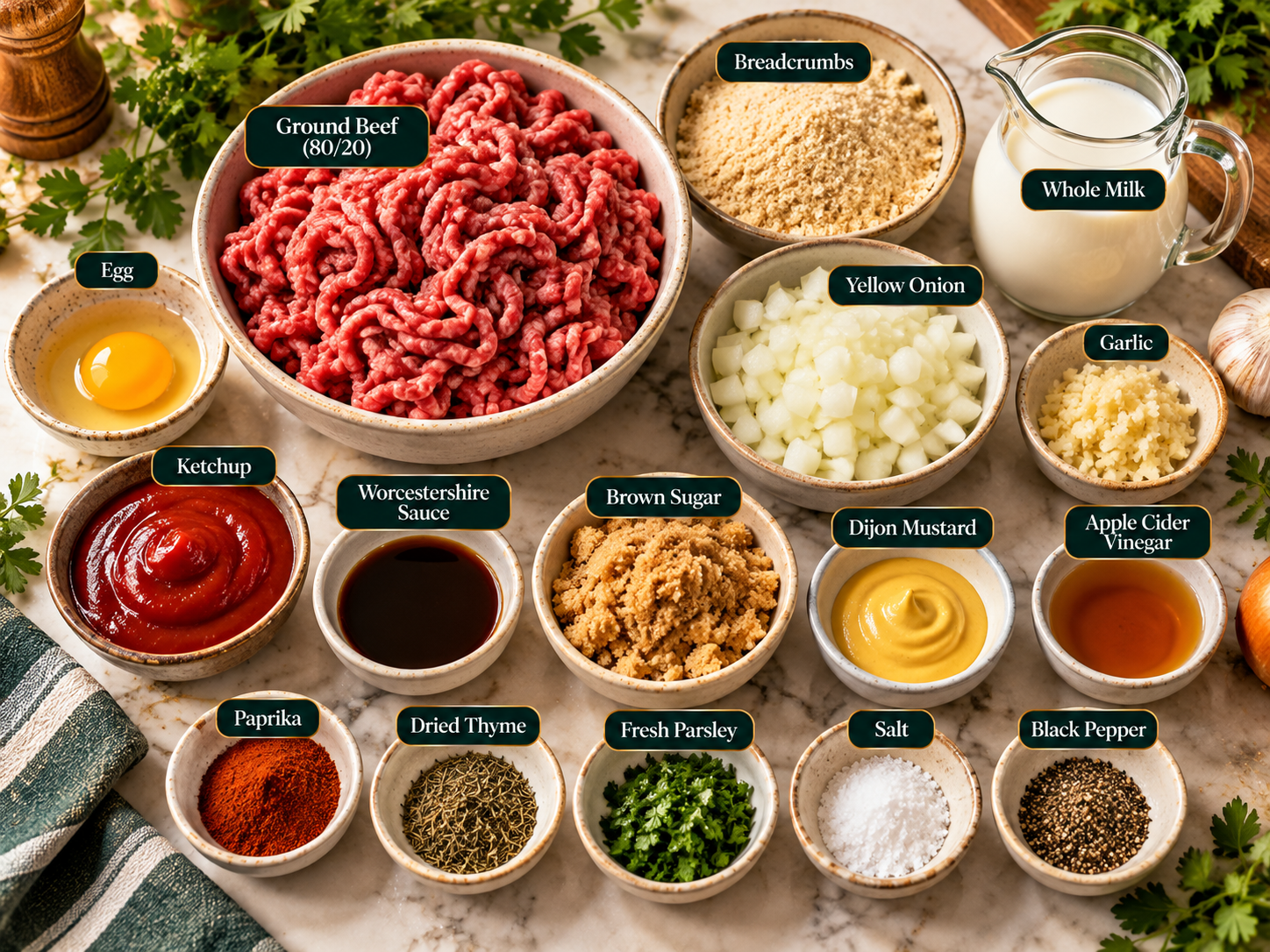
Ingredients You'll Need
- 2 lb (907 g) 80/20 ground beef
- 1 cup (about 110 g) plain dried breadcrumbs
- 1/2 cup (120 ml) whole milk
- 1 large egg
- 1 medium yellow onion, finely diced
- 3 garlic cloves, finely minced
- 1 tbsp olive oil
- 2 tbsp ketchup
- 1 tbsp Worcestershire sauce
- 1 1/2 tsp kosher salt
- 1 tsp smoked or sweet paprika
- 1/2 tsp black pepper
- 1 tsp dried thyme
- 1/2 tsp dried parsley
- For the glaze: 1/2 cup ketchup
- 2 tbsp packed light brown sugar
- 1 tbsp yellow or Dijon mustard
- 1 tsp Worcestershire sauce
- 1 tsp apple cider vinegar
Ingredient Notes
Ground beef
80/20 is the choice for this recipe because it balances beef flavor, tenderness, and moisture.
Breadcrumbs
Plain dried breadcrumbs keep the recipe neutral and let the beef and glaze remain the dominant flavors.
Panko can work, but it creates a somewhat lighter texture and may need slightly more hydration.
Milk
Milk creates the panade with the breadcrumbs. It is an important texture ingredient, not simply extra liquid.
Egg
The egg helps bind the hydrated crumbs and beef into a loaf that slices cleanly after resting.
Worcestershire sauce
A modest amount adds savory depth without overwhelming the classic profile.
Glaze
Ketchup, brown sugar, mustard, Worcestershire, and vinegar create a sweet-tangy-savory finish.
How to Make Classic Meatloaf
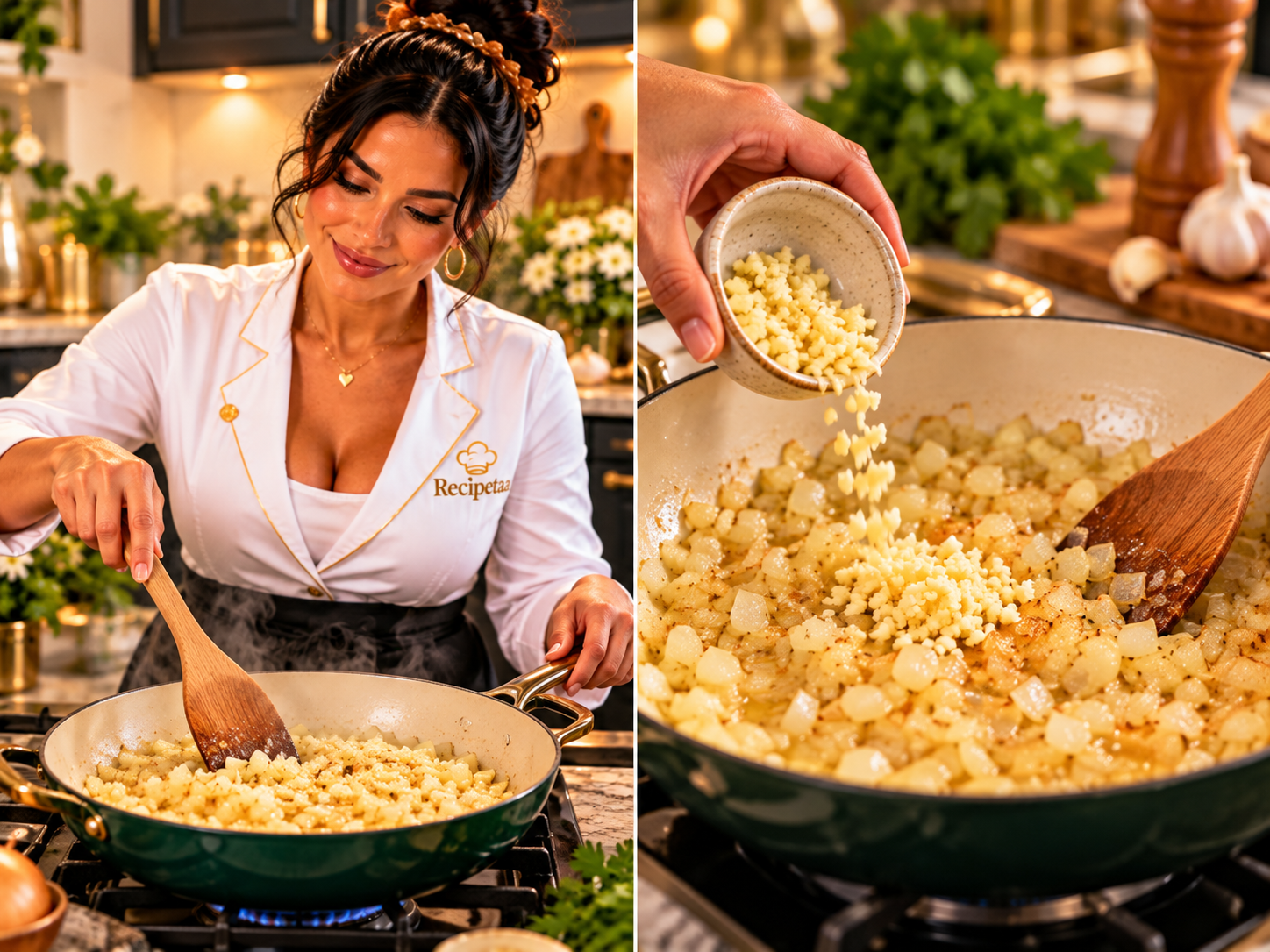
1. Soften the onion and garlic
Heat the olive oil in a skillet over medium heat. Add the diced onion and cook for about 5–7 minutes, stirring occasionally, until softened.
Add the garlic and cook for 30–60 seconds. Remove from the heat and let cool until warm rather than hot.
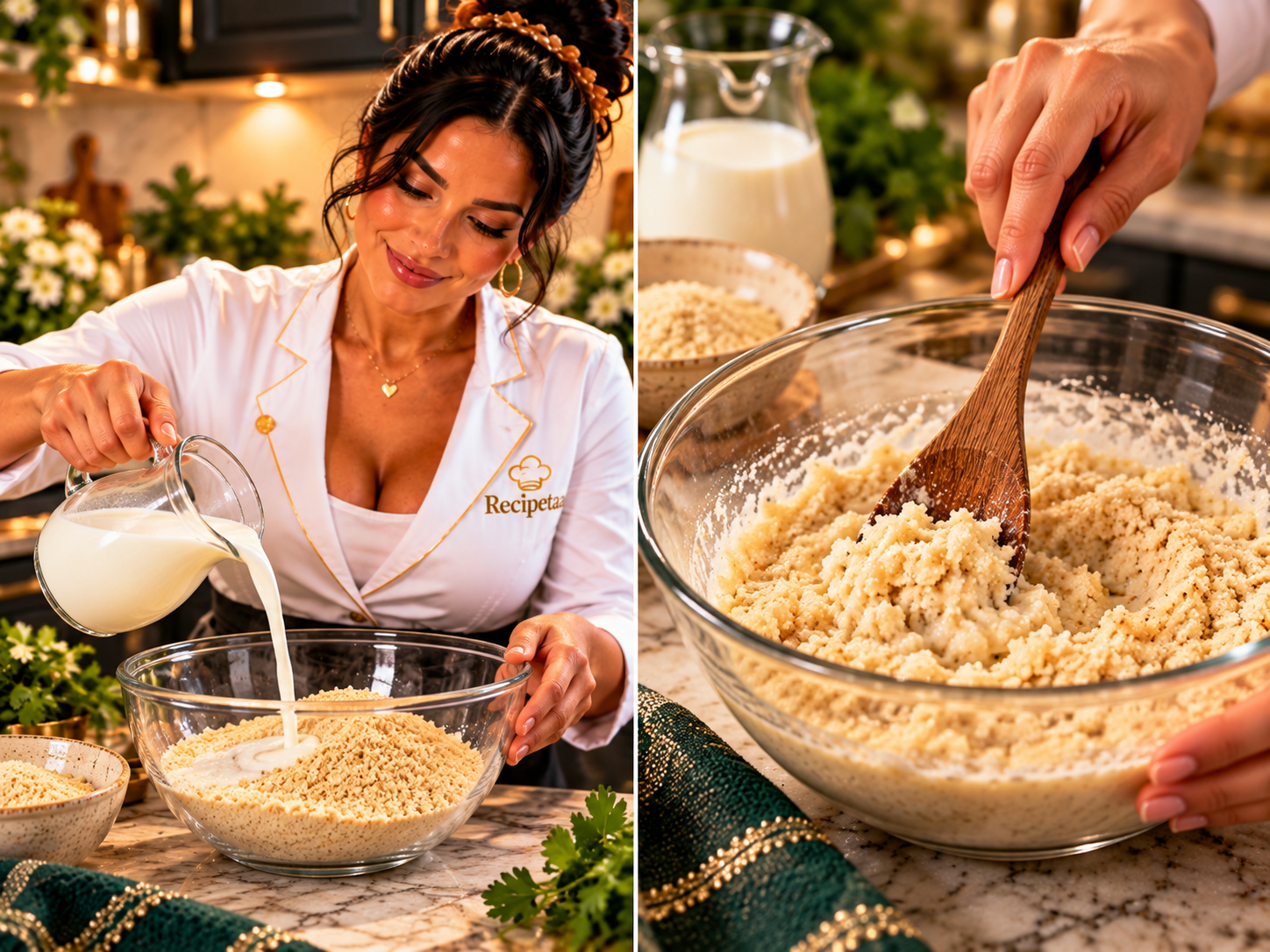
2. Make the panade
In a large bowl, combine the breadcrumbs and milk. Stir and let stand for 3–5 minutes so the breadcrumbs absorb the milk evenly.
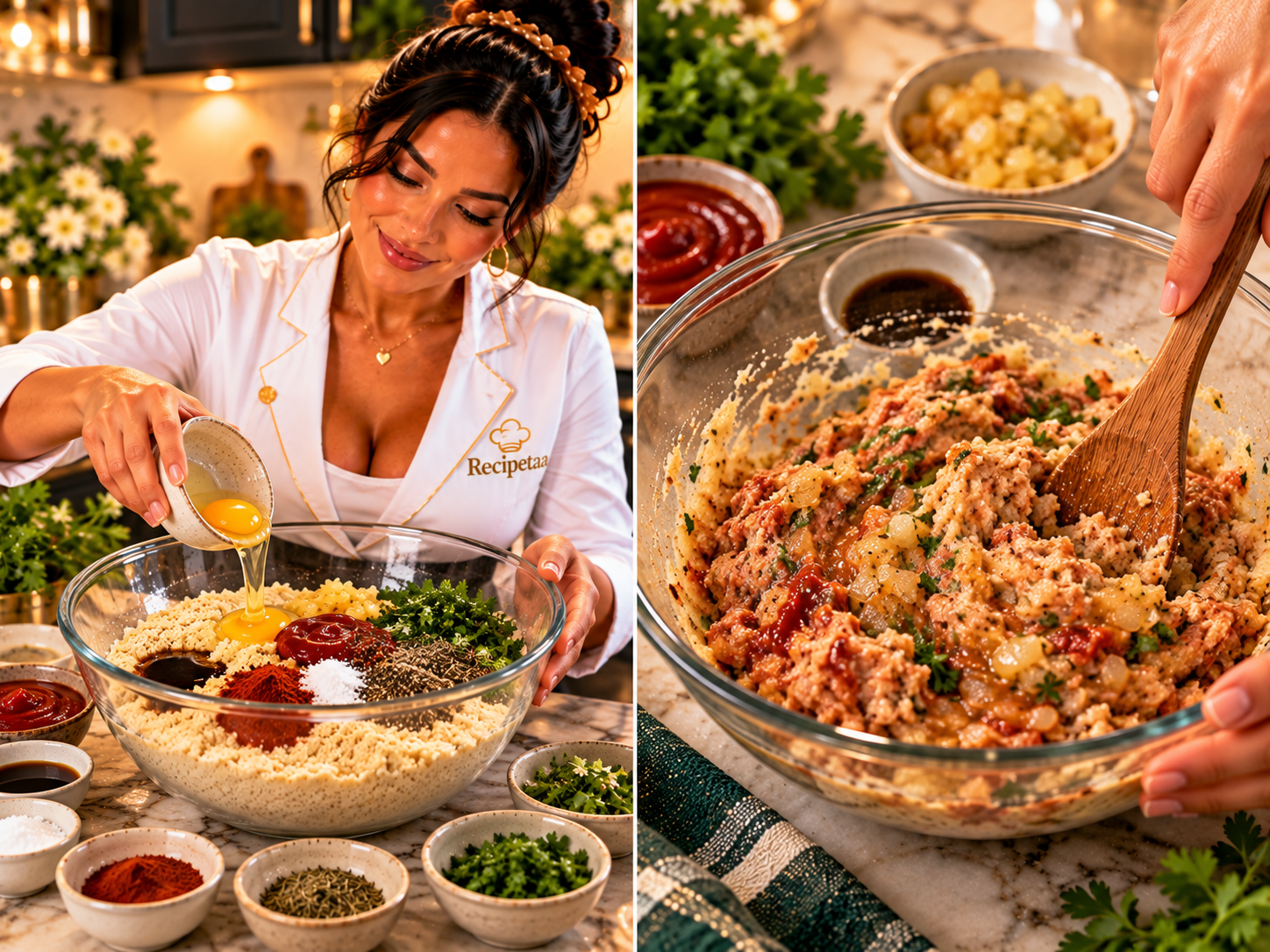
3. Add the binders and seasonings
Add the egg, 2 tablespoons ketchup, Worcestershire sauce, salt, paprika, black pepper, thyme, parsley, and the cooled onion-garlic mixture. Stir until evenly distributed.
4. Add the ground beef
Add the ground beef and use clean hands or a fork to gently mix just until everything is evenly combined. Do not knead the mixture.
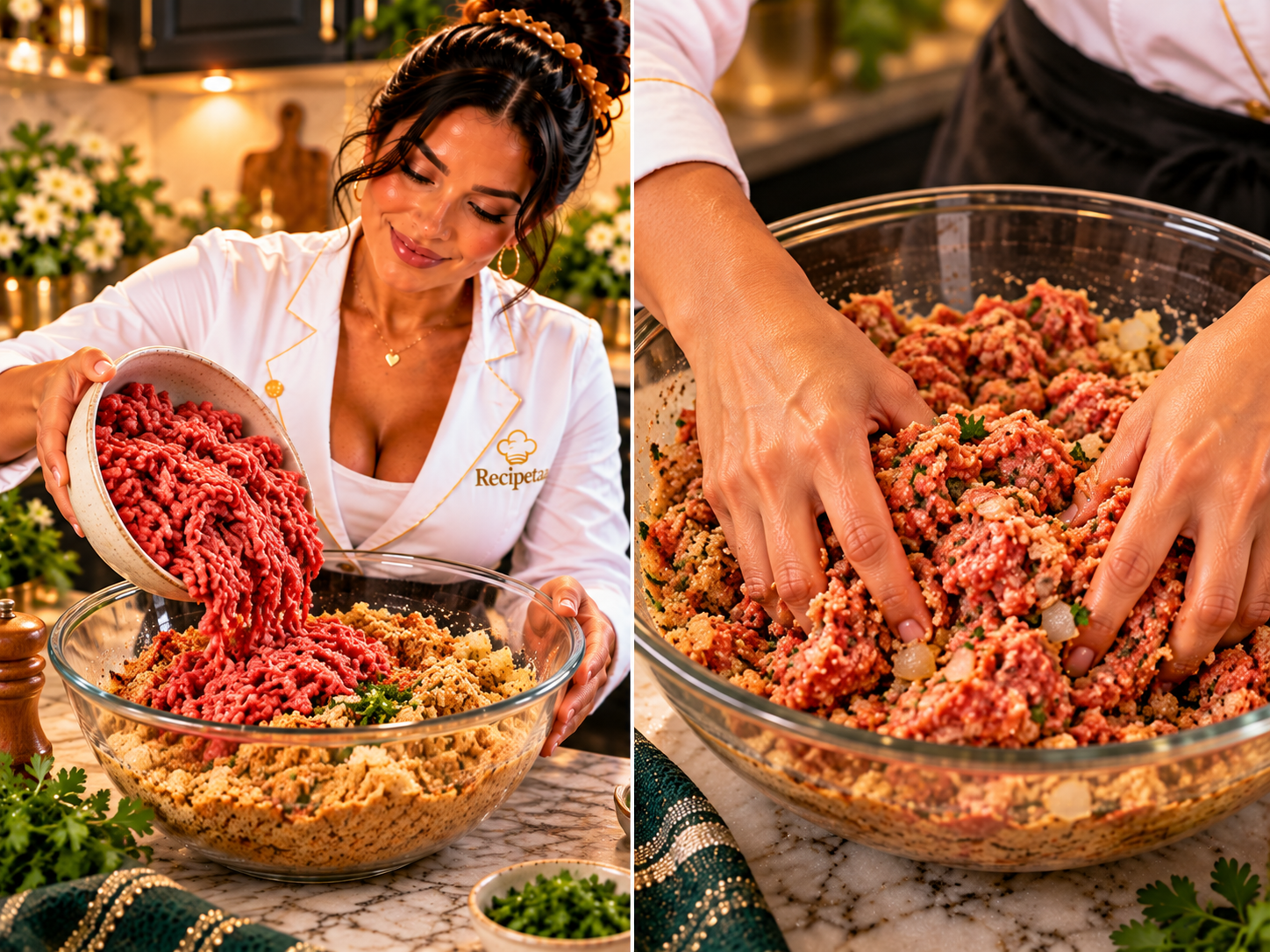
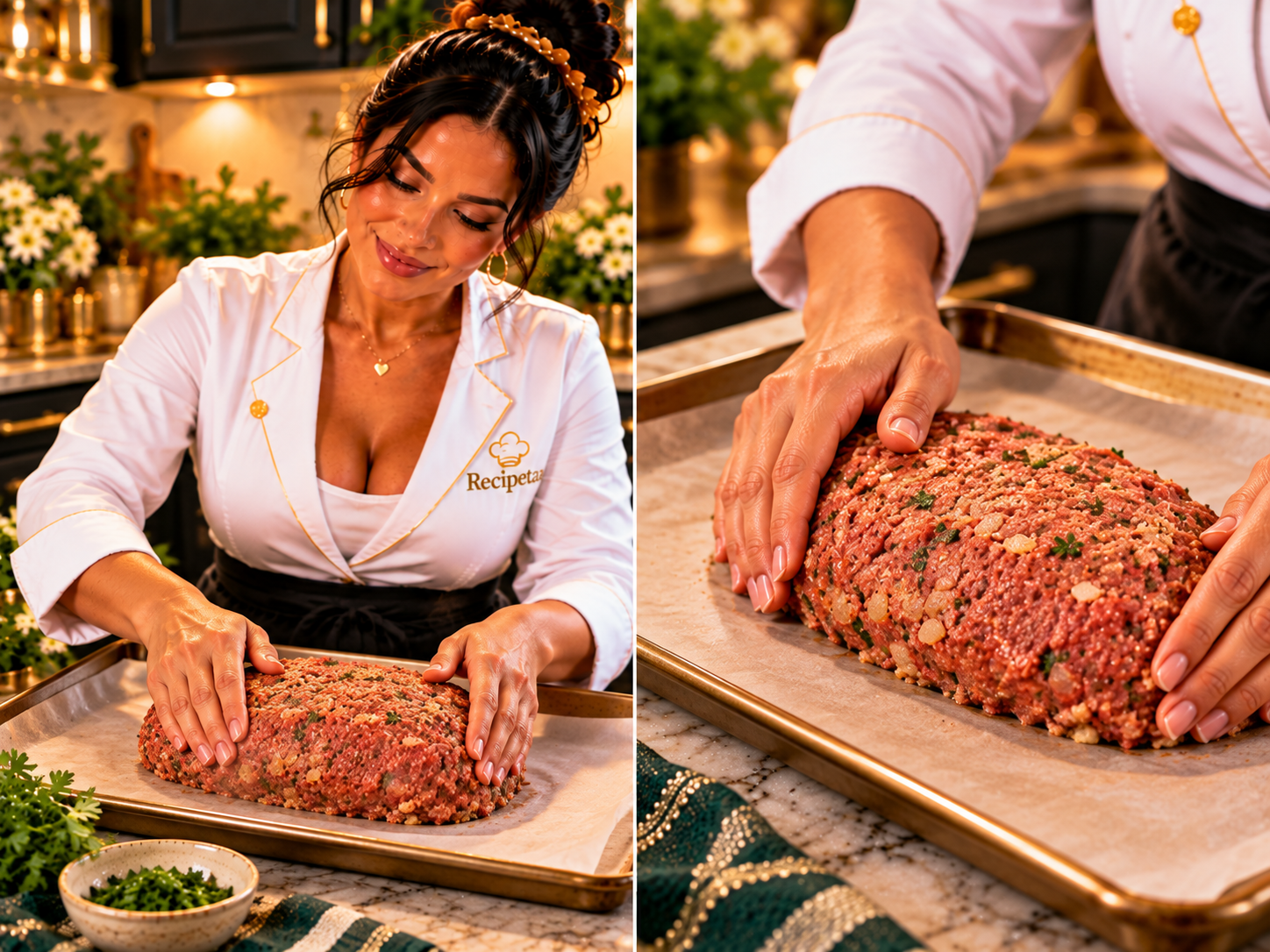
5. Shape the loaf
Line a rimmed baking sheet with parchment or foil. Transfer the mixture to the center and gently shape it into a compact oval loaf about 9 inches long, 5 inches wide, and roughly 2 1/2 inches high. Avoid squeezing it tightly.
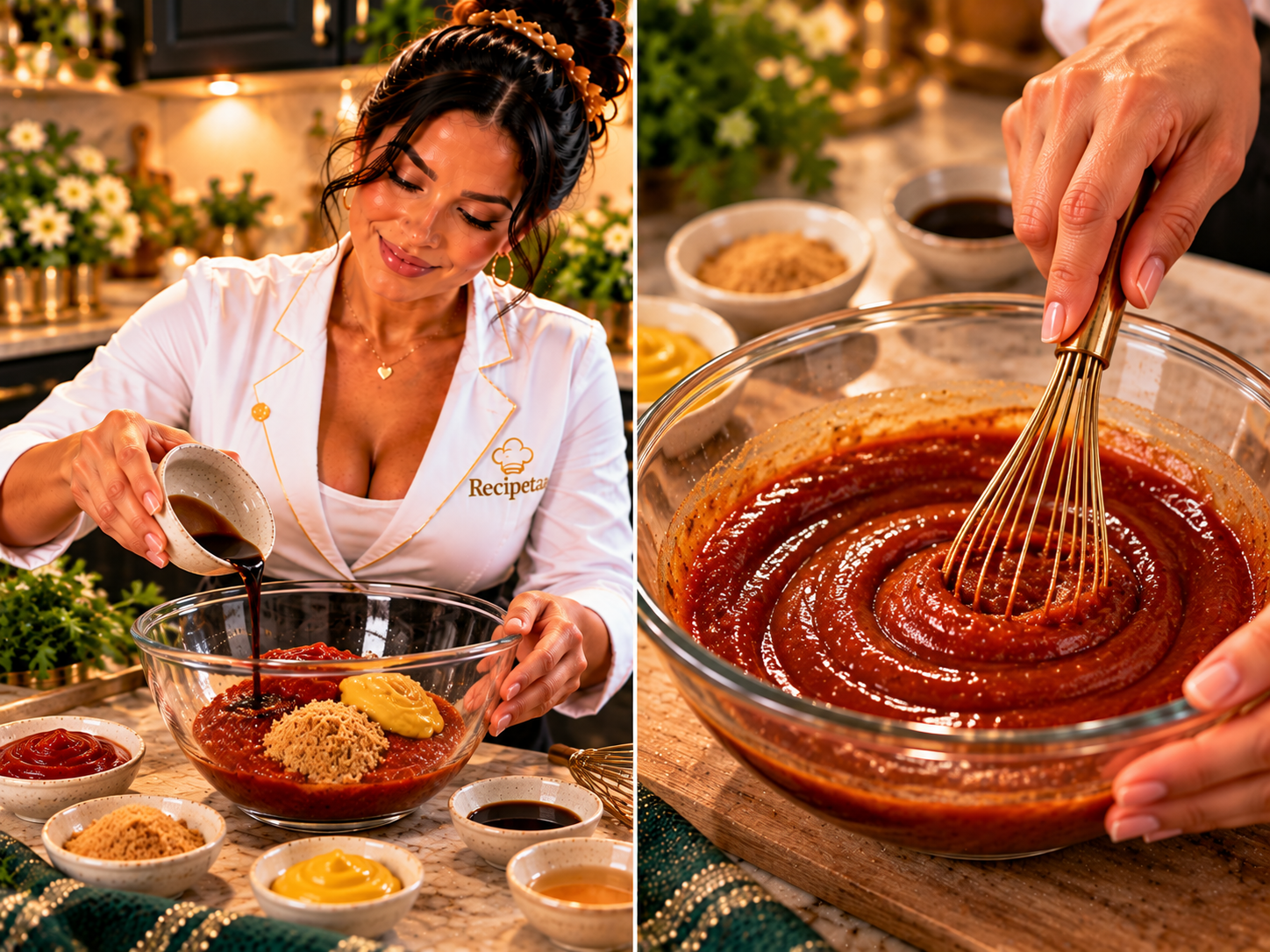
6. Make the glaze
Whisk together the ketchup, brown sugar, mustard, Worcestershire sauce, and apple cider vinegar until smooth.
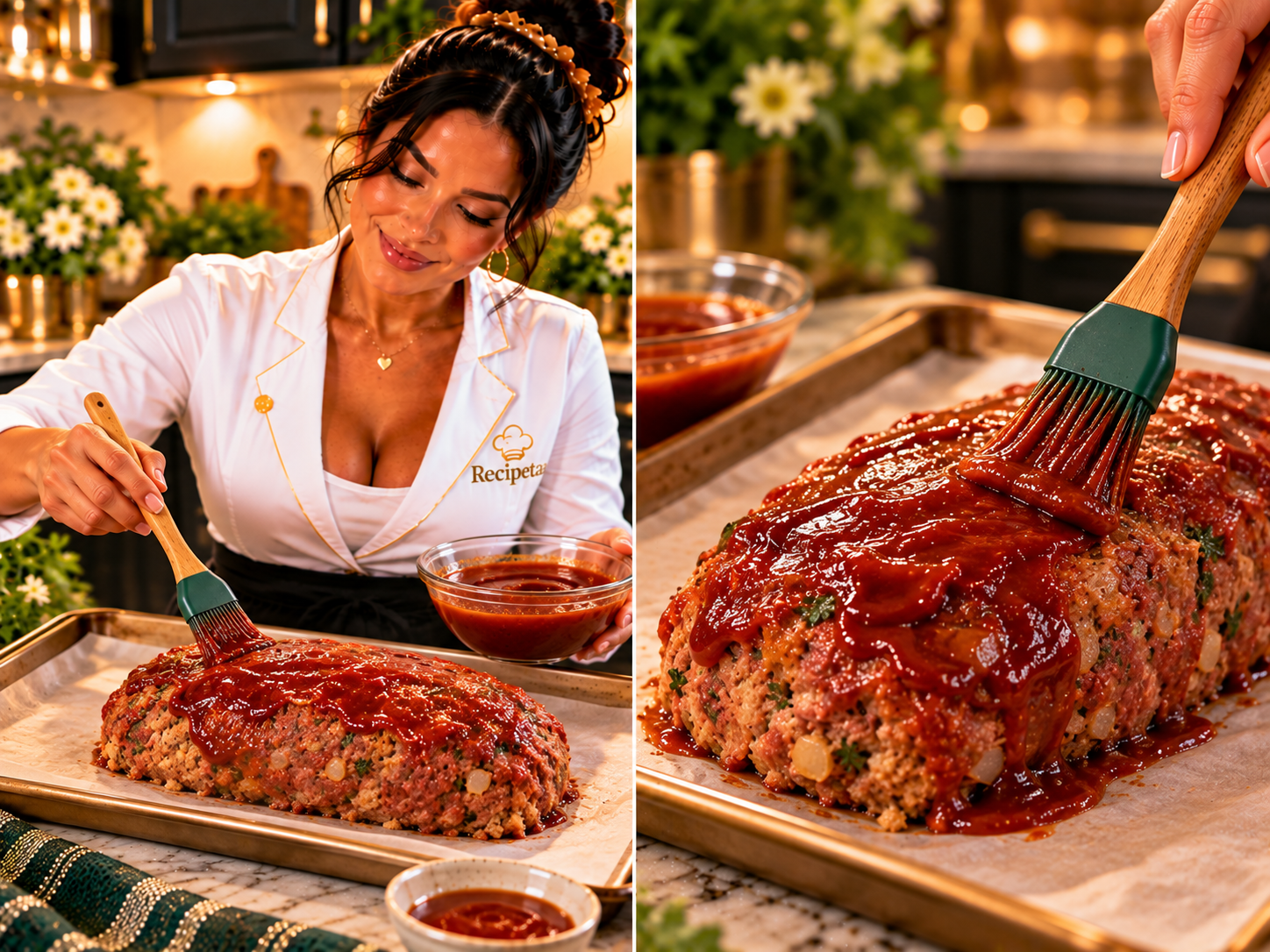
7. Apply the first glaze
Brush about half of the glaze over the top and sides of the meatloaf.
8. Bake
Bake uncovered at 350°F (175°C) for about 35 minutes. Cooking time varies with loaf thickness and oven performance, so do not use time alone to determine doneness.
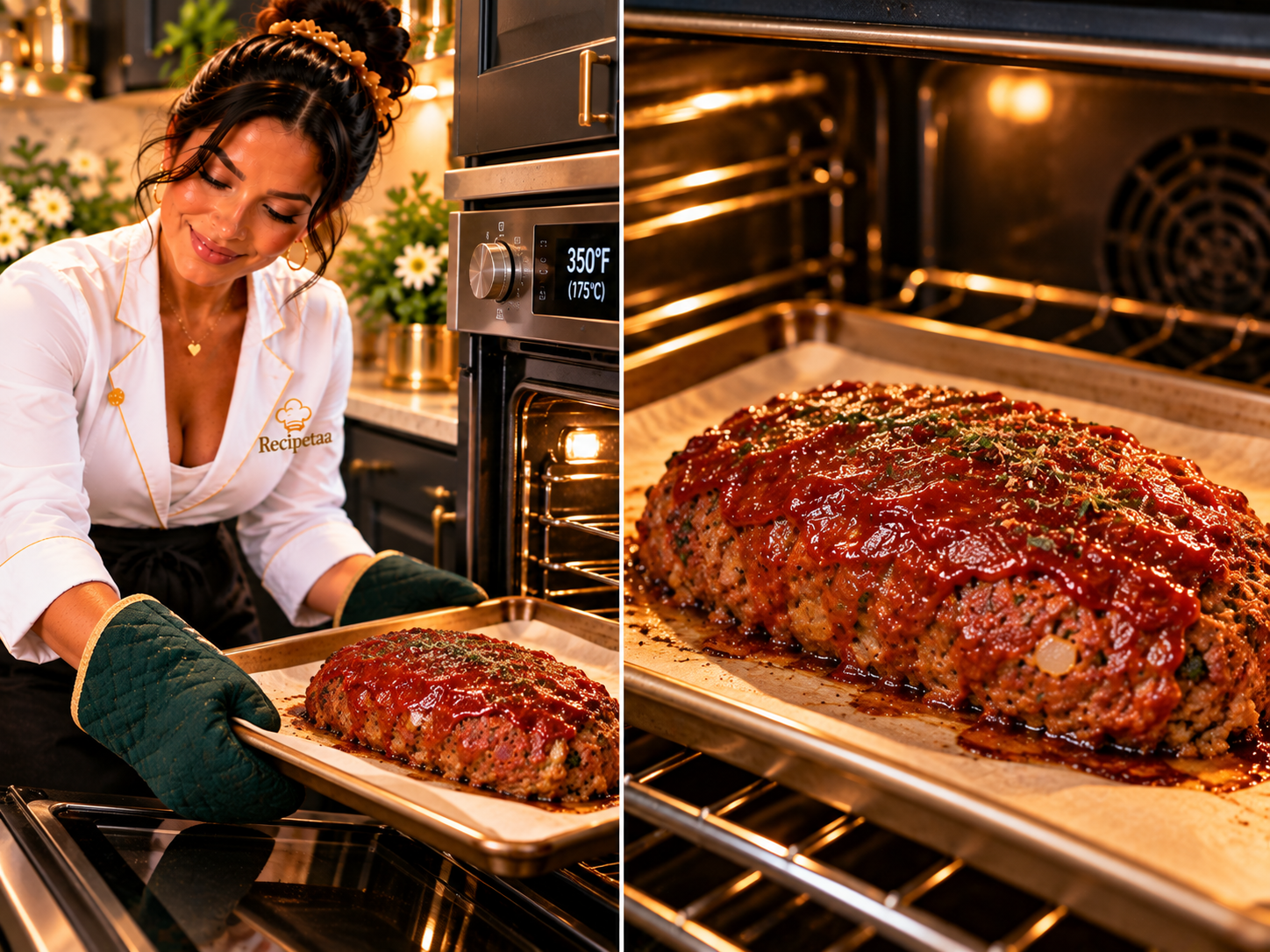
9. Add the final glaze
Remove the pan carefully and brush the remaining glaze over the top. Return the meatloaf to the oven.
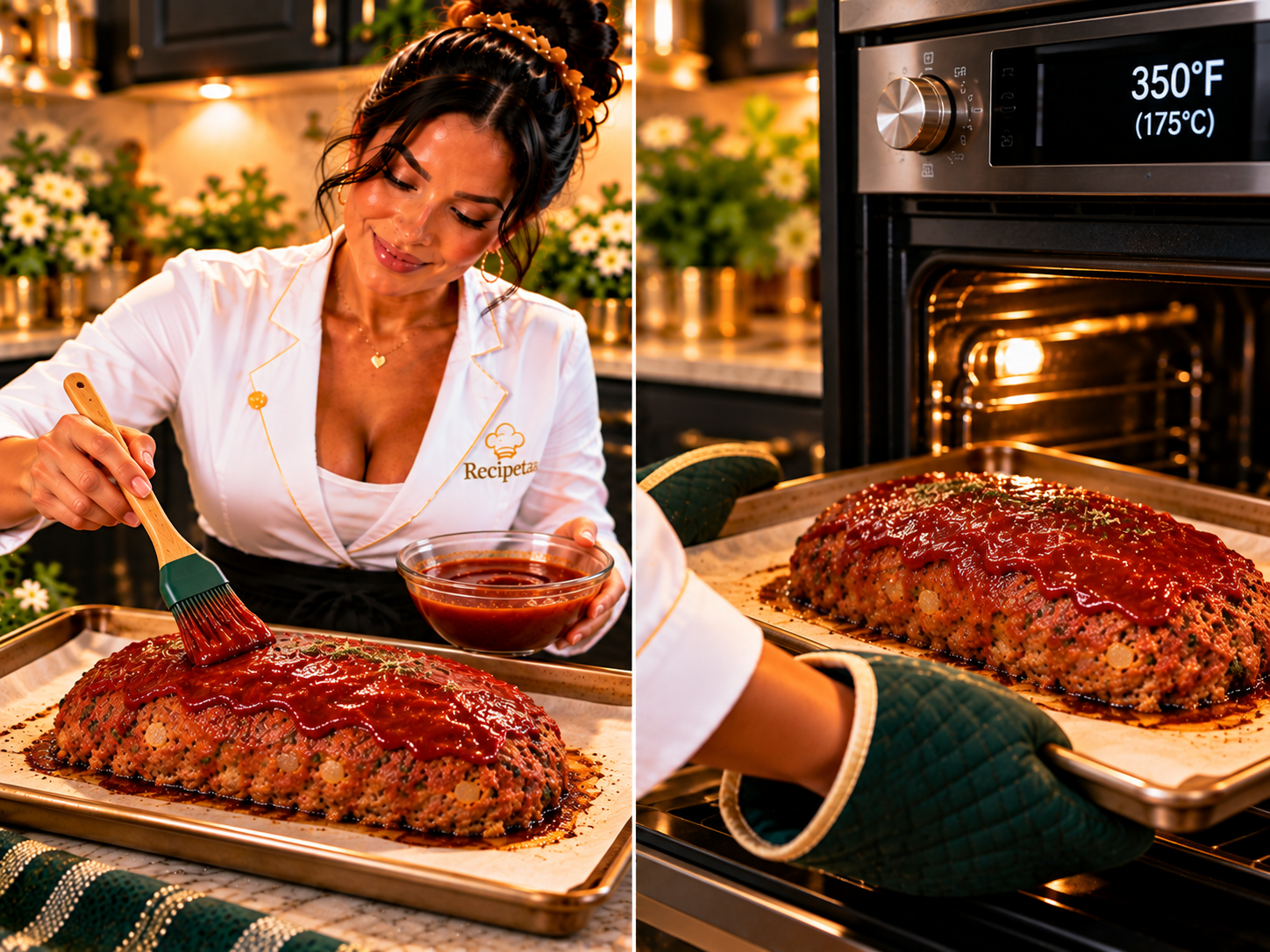
10. Finish by temperature
Continue baking until an instant-read thermometer inserted into the thickest center reaches 160°F (71°C).
For a 2-pound free-form loaf, the total baking time will commonly be around 65–75 minutes, but the thermometer is the deciding test.
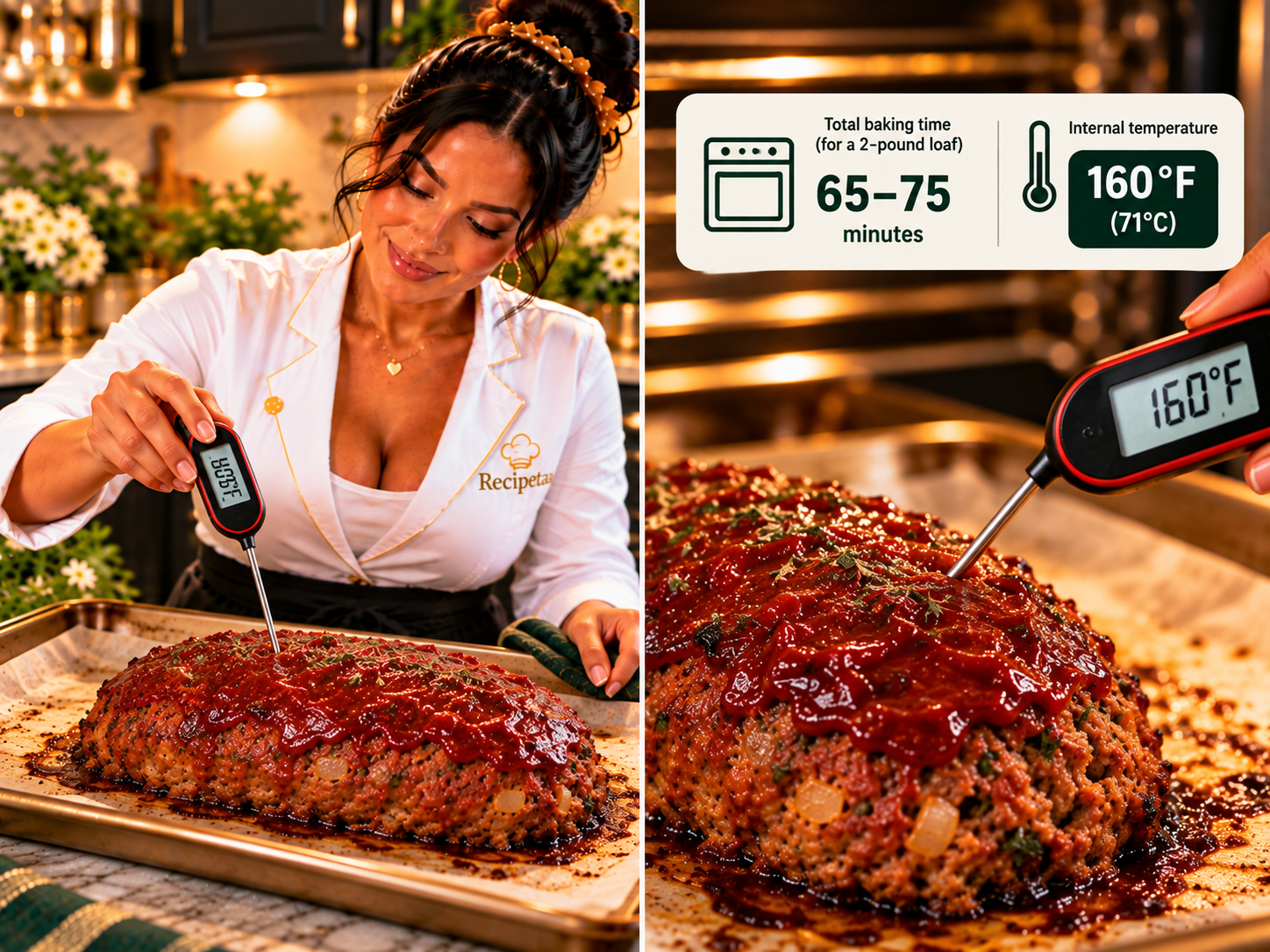
11. Rest before slicing
Transfer the meatloaf to a cutting board and rest for 10–15 minutes. Slice with a sharp knife and serve.
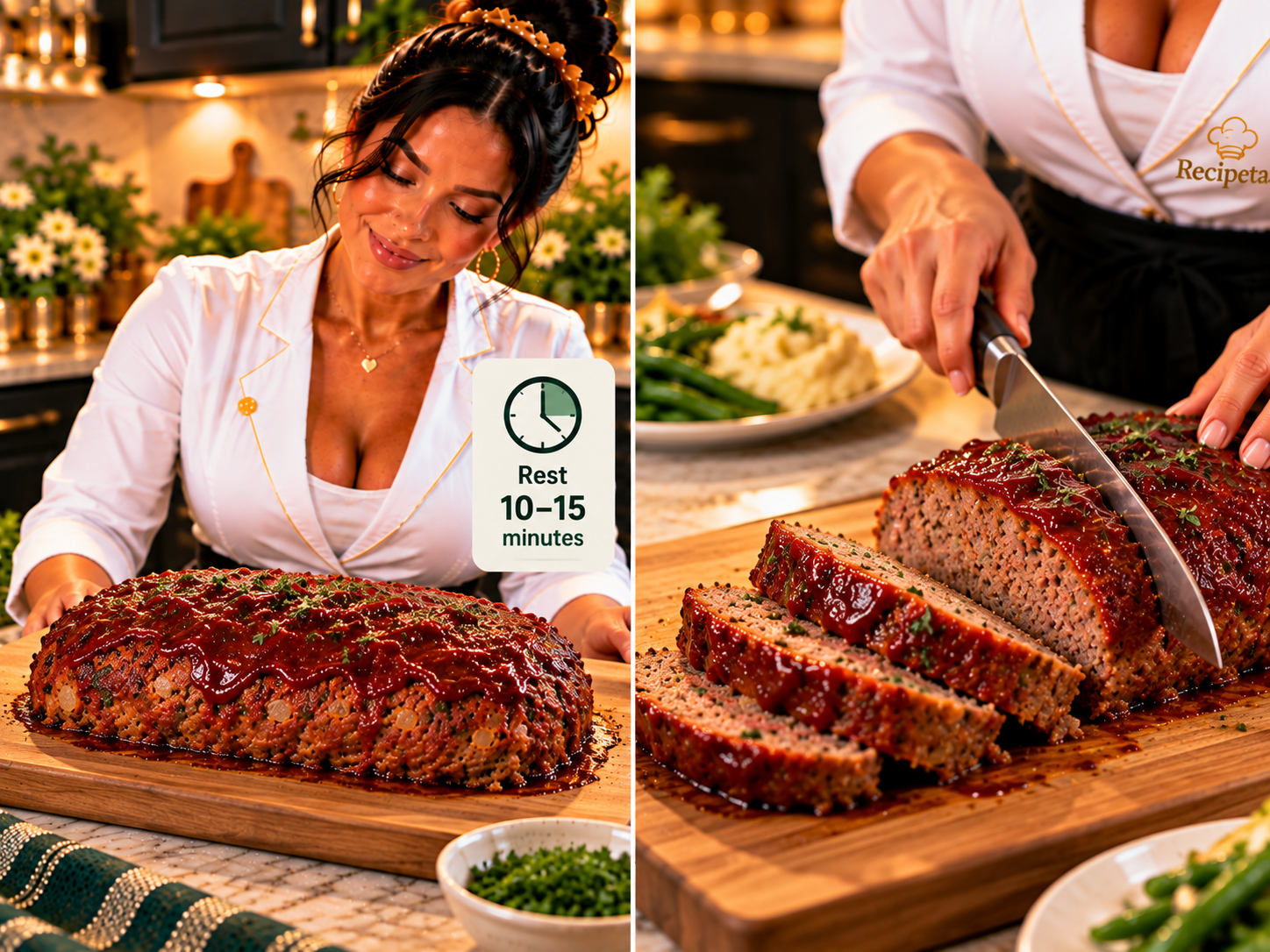
Why the Panade Matters
A panade is a mixture of bread or breadcrumbs and liquid. Here, the milk hydrates the breadcrumbs before they are mixed with the beef.
That gives the crumbs a chance to hold moisture within the meatloaf rather than simply competing with the beef for moisture during baking.
This is one of the simplest ways to improve a classic meatloaf without adding unusual ingredients. It also explains why milk appears in many traditional meatloaf recipes.
Why Does Meatloaf Fall Apart?
A meatloaf that crumbles when sliced can have too little binding power, too much free liquid, or simply be sliced before it has rested.
The egg and hydrated breadcrumbs in this recipe provide structure, while the resting period gives the loaf time to set.
- Measure the breadcrumbs and milk rather than adding liquid by eye.
- Do not add extra milk unless the mixture is genuinely too dry to combine.
- Shape the loaf firmly enough to hold together, but do not compress it into a dense block.
- Let the cooked loaf rest 10–15 minutes before slicing.
Why Is My Meatloaf Dry?
The most common causes are overcooking, very lean beef, too much dry binder, or excessive mixing.
The 80/20 beef in this recipe provides more moisture than ultra-lean beef, while the panade helps retain tenderness.
Most importantly, use the thermometer. A recipe can give an estimated cooking window, but ovens, pans, loaf dimensions, and starting meat temperature all affect how quickly the center heats.
Why Is My Meatloaf Dense?
Dense meatloaf is usually a mixing and shaping problem. Ground beef should be combined only until the ingredients are evenly distributed. Do not knead it like bread, and do not repeatedly squeeze the mixture while shaping.
Why Does Meatloaf Crack?
Cracking can happen when the loaf surface dries and the interior expands during cooking, especially if the mixture is tightly packed or the oven is relatively hot.
Shape the loaf gently, keep the mixture properly hydrated, and avoid overbaking. A small crack does not mean the meatloaf has failed because the glaze will cover many surface imperfections.
Meatloaf Pan vs. Free-Form Loaf
For this recipe, a free-form loaf on a lined baking sheet is the better choice because it exposes more surface area to the oven.
That encourages browning and gives the glaze more room to caramelize. It also lets rendered fat drain away from the loaf.
A loaf pan is still useful when you want a more traditional rectangular shape or prefer to serve the meatloaf directly from the pan.
If you use one, avoid packing the mixture excessively tightly and keep temperature-checking at the center.
What Temperature Should Meatloaf Be Cooked To?
For ground beef, the USDA recommends a minimum internal temperature of 160°F (71°C), measured with a food thermometer.
Meatloaf is a ground-meat mixture, so internal temperature is a more reliable safety test than color or a fixed cooking time.
Insert the thermometer into the thickest center of the loaf. Do not rely on the meat looking brown or on the timer alone. USDA guidance specifically notes that color is not a reliable indicator of safe doneness for ground beef.
How Long Does Meatloaf Take to Cook?
For this 2-pound free-form loaf baked at 350°F (175°C), plan for roughly 65–75 minutes as a starting range. That is an estimate, not a guarantee.
Loaf thickness, pan material, oven calibration, and the starting temperature of the beef can all change the timing.
This temperature-first approach directly addresses a common problem most people who tried this recipe have.
They repeatedly reported that most published timings were too short and that their loaves required substantially longer to reach 160°F.
The Two-Stage Meatloaf Glaze
Applying glaze in two stages gives the meatloaf both flavor and a glossy finish. The first layer begins to cook onto the surface.
The second layer is added later so it remains more pronounced instead of disappearing into the crust.
The flavor balance is intentionally classic: ketchup for tomato richness, brown sugar for sweetness, mustard for tang, Worcestershire for savory depth, and vinegar to keep the glaze from becoming flat or overly sweet.
Best Ground Beef for Meatloaf
For this recipe, 80/20 ground beef is the recommended starting point. It contains enough fat to support a juicy texture while still producing a balanced loaf.
Very lean beef can work, but it gives you less margin for error if the loaf is cooked beyond its ideal endpoint.
Recipetaa specifically recommends 80/20 or a similarly moderate-fat ground beef for the ground beef rather than making the recipe dependent on a beef-and-pork blend.
Breadcrumbs vs. Crackers vs. Panko
Plain dried breadcrumbs are the most straightforward choice for this classic version. Crushed crackers can add salt and a slightly different texture, so adjust seasoning if you substitute them.
Panko can also be used, but because it is more coarse and airy, it does not hydrate exactly like fine breadcrumbs.
If you change the binder, pay attention to the mixture's texture. It should hold together when gently pressed but should not feel stiff or pasty.
Can I Make Meatloaf Ahead of Time?
Yes. Assemble the meatloaf, shape it, cover it tightly, and refrigerate it until you are ready to bake.
For best quality and food safety, keep the raw mixture properly chilled and avoid leaving it at room temperature while preparing other dishes.
Because the loaf is cold when it goes into the oven, expect the cooking time to be longer than it would be for a mixture that has been sitting out.
Again, use the thermometer rather than relying on the estimated time.
Storage, Freezing & Reheating
How to Store Meatloaf
Cool leftovers promptly, then refrigerate them in an airtight container. USDA guidance recommends using cooked leftovers within 3–4 days when properly refrigerated.
Can You Freeze Meatloaf?
Yes. Freeze cooled meatloaf whole or in individual slices, wrapped tightly and sealed against freezer air.
Slices are especially convenient for quick dinners and sandwiches. For best quality, use within about 2–3 months.
How to Reheat Meatloaf
For the best texture, reheat slices covered in a 325–350°F oven with a small splash of water or broth until hot throughout.
Individual slices can also be reheated gently in the microwave. USDA guidance recommends reheating leftovers to 165°F.
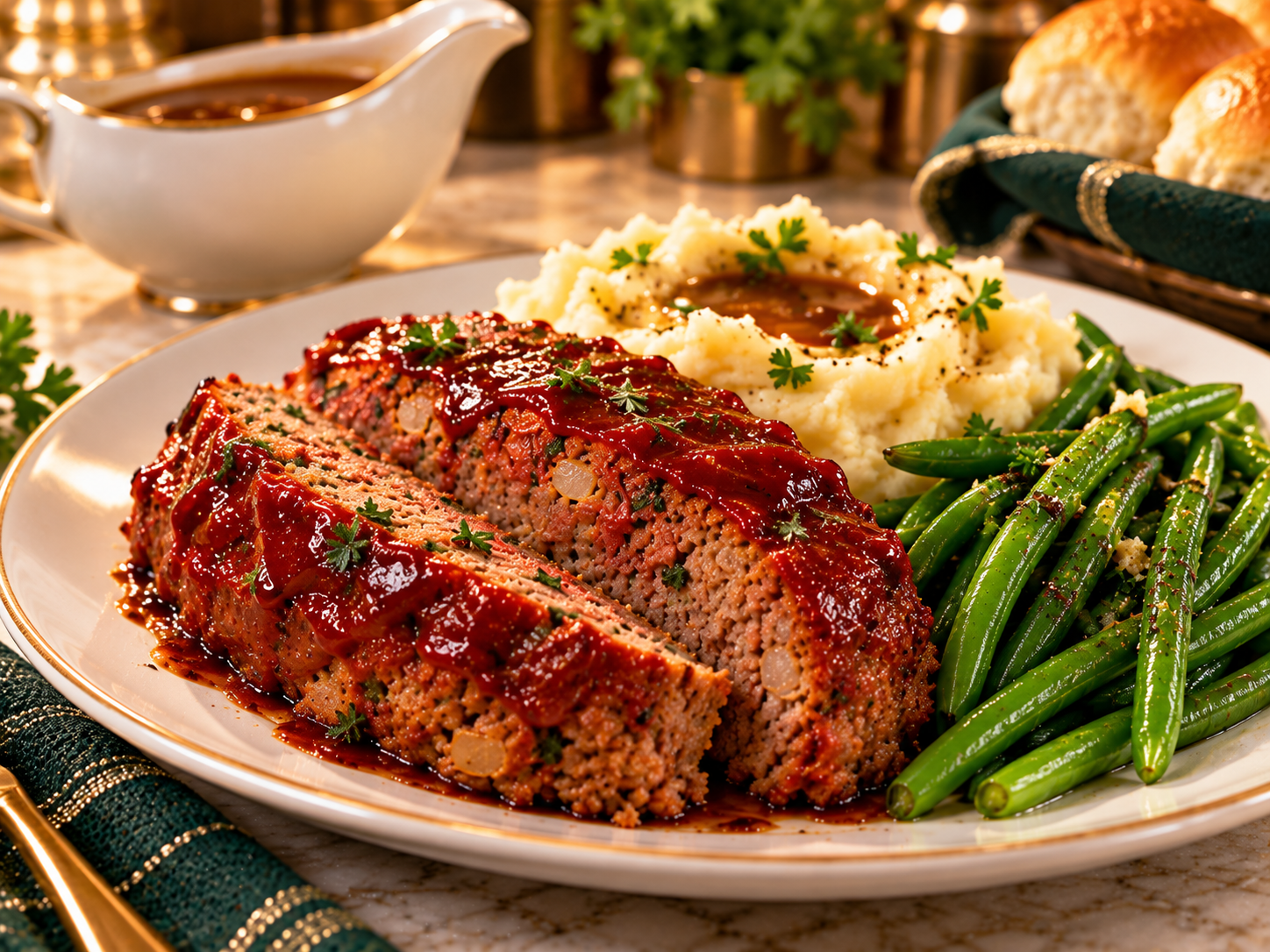
What Goes Well With Meatloaf?
The classic plate is simple and satisfying:
- Creamy mashed potatoes
- Buttery green beans
- Roasted carrots
- Macaroni and cheese
- Corn or creamed corn
- Dinner rolls
- Simple roasted vegetables
- Brown gravy, served alongside rather than replacing the glaze
Leftover Meatloaf Ideas
The leftovers are often one of the best parts. Thick slices can be reheated and tucked into toasted bread with cheese for a meatloaf sandwich or melt.
You can also dice leftover meatloaf into a breakfast hash, crumble it into pasta sauce, or use it in sliders.
From Chef Olivia
A great classic meatloaf does not need complicated ingredients. It needs the right balance of beef, moisture, binder, seasoning, glaze, and technique.
This version keeps the familiar comfort-food character readers expect from a classic meatloaf recipe while making the important texture and food-safety decisions explicit.
Serve it with creamy mashed potatoes and green beans, save a few slices for tomorrow, and let the thermometer, not the clock alone, tell you when dinner is ready
Frequently Asked Questions
What makes meatloaf moist?
Moderate-fat ground beef, a properly hydrated breadcrumb-and-milk panade, restrained mixing, and avoiding overcooking are the biggest factors.
What is the best meat for meatloaf?
For this classic version, 80/20 ground beef is the recommended choice. It provides a good balance of beef flavor, fat, and moisture.
Should I use breadcrumbs or crackers in meatloaf?
Plain breadcrumbs are the simplest choice for this recipe. Crackers can work, but they may add more salt and change the texture.
Why do you put milk in meatloaf?
Milk hydrates the breadcrumbs to create a panade, which helps the meatloaf retain moisture and stay tender.
Why does my meatloaf fall apart?
Common causes include too little binder, too much liquid, slicing too soon, or a mixture that was not properly combined. Resting is important.
Why is my meatloaf dry?
Overcooking is the most common cause. Very lean beef and too much dry binder can also contribute.
Why is my meatloaf dense?
Overmixing or tightly compressing the mixture can create a dense texture. Mix only until evenly combined and shape gently.
What temperature should meatloaf be cooked to?
Ground beef meatloaf should reach 160°F (71°C) in the center, checked with a food thermometer.
How long should meatloaf rest before slicing?
Rest it for about 10–15 minutes. This helps the loaf set and makes cleaner slices.
Should meatloaf be cooked covered or uncovered?
This recipe is baked uncovered so the surface can brown and the glaze can caramelize.
Is it better to cook meatloaf in a loaf pan or free-form?
A free-form loaf gives more surface area for browning and glaze. A loaf pan gives a neater, more traditional shape.
Can I make meatloaf ahead of time?
Yes. Assemble and refrigerate the uncooked loaf, then bake it when needed. Allow extra cooking time because the mixture will be chilled.
Can I freeze meatloaf?
Yes. Freeze cooked meatloaf whole or sliced in airtight packaging for best quality for about 2–3 months.
How do I reheat meatloaf?
Reheat covered in a moderate oven or gently in the microwave until hot throughout. For food safety, leftovers should reach 165°F.
What goes well with meatloaf?
Mashed potatoes, green beans, roasted carrots, macaroni and cheese, corn, dinner rolls, and roasted vegetables all pair well.
Classic Meatloaf Recipe
Tender, juicy classic beef meatloaf with a savory breadcrumb-and-milk panade and a glossy sweet-and-tangy brown-sugar ketchup glaze.
- Prep
- 25 min
- Cook
- 75 min
- Total
- 100 min
- Servings
- 8
- Difficulty
- Easy
- Cuisine
- American
Ingredients
- 2 lb (907 g) 80/20 ground beef
- 1 cup (about 110 g) plain dried breadcrumbs
- 1/2 cup (120 ml) whole milk
- 1 large egg
- 1 medium yellow onion, finely diced
- 3 garlic cloves, finely minced
- 1 tbsp olive oil
- 2 tbsp ketchup
- 1 tbsp Worcestershire sauce
- 1 1/2 tsp kosher salt
- 1 tsp smoked or sweet paprika
- 1/2 tsp black pepper
- 1 tsp dried thyme
- 1/2 tsp dried parsley
- For the glaze: 1/2 cup ketchup
- 2 tbsp packed light brown sugar
- 1 tbsp yellow or Dijon mustard
- 1 tsp Worcestershire sauce
- 1 tsp apple cider vinegar
Method
- Soften the onion and garlic
Heat the olive oil in a skillet over medium heat. Add the diced onion and cook for about 5–7 minutes, stirring occasionally, until softened. Add the garlic and cook for 30–60 seconds. Remove from the heat and let cool until warm rather than hot.
- Make the panade
In a large bowl, combine the breadcrumbs and milk. Stir and let stand for 3–5 minutes so the breadcrumbs absorb the milk evenly.
- Add the binders and seasonings
Add the egg, 2 tablespoons ketchup, Worcestershire sauce, salt, paprika, black pepper, thyme, parsley, and the cooled onion-garlic mixture. Stir until evenly distributed.
- Add the ground beef
Add the ground beef and use clean hands or a fork to gently mix just until everything is evenly combined. Do not knead the mixture.
- Shape the loaf
Line a rimmed baking sheet with parchment or foil. Transfer the mixture to the center and gently shape it into a compact oval loaf about 9 inches long, 5 inches wide, and roughly 2 1/2 inches high. Avoid squeezing it tightly.
- Make the glaze
Whisk together the ketchup, brown sugar, mustard, Worcestershire sauce, and apple cider vinegar until smooth.
- Apply the first glaze
Brush about half of the glaze over the top and sides of the meatloaf.
- Bake
Bake uncovered at 350°F (175°C) for about 35 minutes. Cooking time varies with loaf thickness and oven performance, so do not use time alone to determine doneness.
- Add the final glaze
Remove the pan carefully and brush the remaining glaze over the top. Return the meatloaf to the oven.
- Finish by temperature
Continue baking until an instant-read thermometer inserted into the thickest center reaches 160°F (71°C). For a 2-pound free-form loaf, the total baking time will commonly be around 65–75 minutes, but the thermometer is the deciding test.
- Rest before slicing
Transfer the meatloaf to a cutting board and rest for 10–15 minutes. Slice with a sharp knife and serve.
Estimated nutrition per serving
- calories
- 440 kcal
- protein
- 30g
- carbs
- 28g
- fat
- 26g
Visit the recipe page for serving adjustments, saving, printing, and cooking tools.