Easy Macaroni and Cheese Recipe | Creamy, Cheesy & Homemade
Make this easy, creamy homemade macaroni and cheese recipe with tender elbow pasta, sharp cheddar, Gruyère and a golden buttery panko topping.
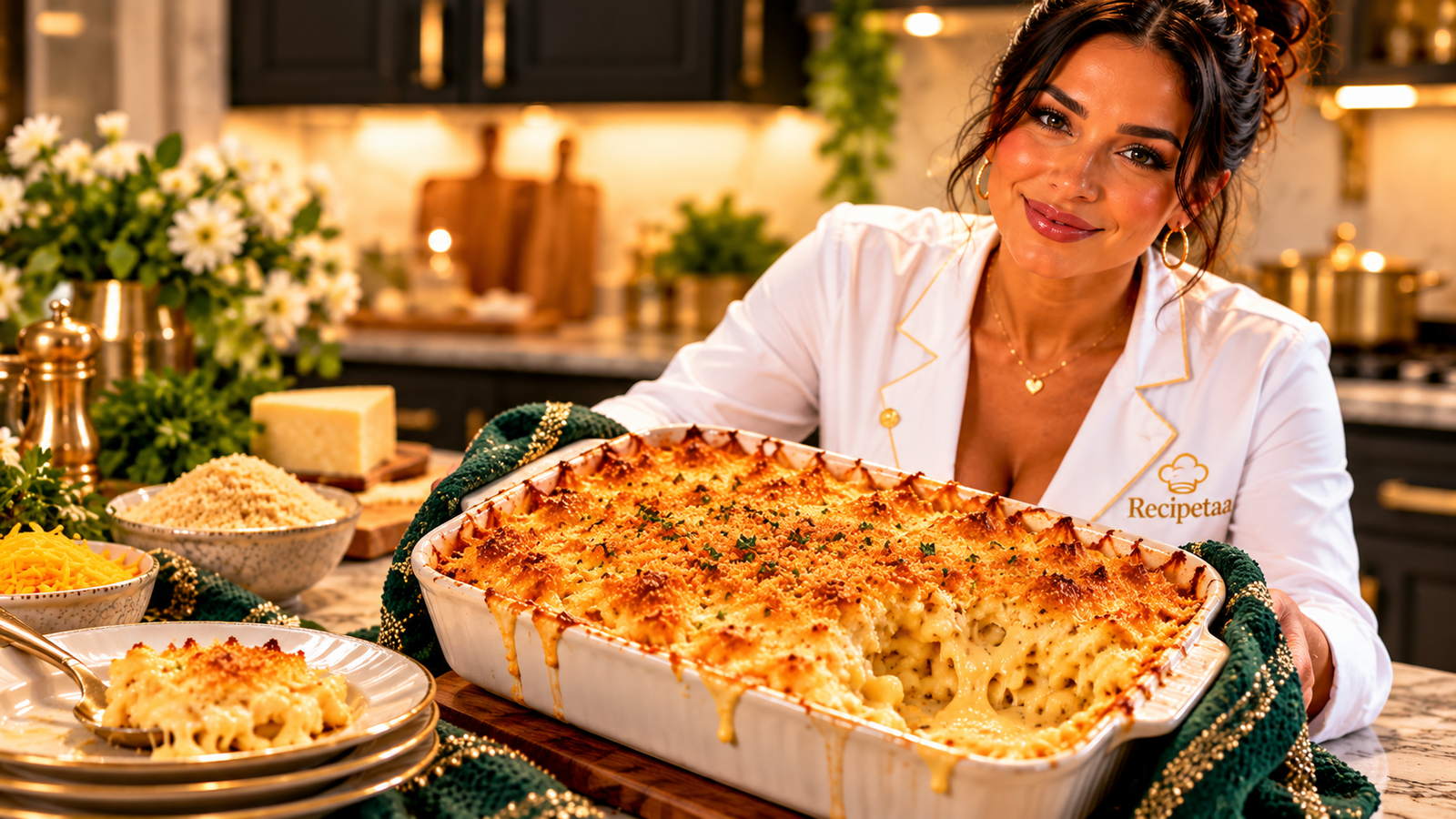
This homemade macaroni and cheese recipe combines tender elbow macaroni with a rich, creamy cheese sauce made from scratch, then bakes it until bubbling underneath and golden on top.
Sharp cheddar gives it the familiar flavor people expect, Gruyère adds nutty depth and excellent melting, and buttery panko provides a crisp contrast.
Why You'll Love This Mac and Cheese
- Rich and creamy without boxed cheese powder.
- Sharp cheddar delivers classic mac-and-cheese flavor.
- Gruyère adds nutty depth without making the recipe complicated.
- Buttery panko gives the top a crisp golden finish.
- The sauce is intentionally loose before baking to reduce the risk of dry pasta.
- Made completely from scratch.
- Suitable for weeknight dinners, holidays and family gatherings.
What Makes This Recipe Different?
This recipe is very simple, but its review history repeatedly mentions bland flavor, excessive sauce, floury texture, graininess and roux problems.
The Recipetaa version responds with a more balanced pasta-to-sauce structure, sharper cheese flavor, a controlled roux, freshly grated cheese and a short bake.
Guidance from top chefs likewise emphasizes al dente pasta, roux-based sauce, freshly grated cheese and a sauce that remains loose before baking.
Ingredients You'll Need
For the Macaroni
- 1 lb (454 g) elbow macaroni
- Kosher salt, for pasta water
For the Cheese Sauce
- 6 tablespoons (85 g) unsalted butter
- ¼ cup (32 g) all-purpose flour
- 3 cups (720 ml) whole milk, warmed
- 1 teaspoon Dijon mustard
- ½ teaspoon garlic powder
- ½ teaspoon sweet paprika
- ½ teaspoon kosher salt, plus more to taste
- ½ teaspoon black pepper
- ¼ teaspoon cayenne pepper, optional
- 12 oz (340 g) sharp cheddar, freshly grated
- 6 oz (170 g) Gruyère, freshly grated
- 2 tablespoons finely grated Parmesan
For the Golden Panko Topping
- 1 cup (50–60 g) panko breadcrumbs
- 2 tablespoons (28 g) unsalted butter, melted
- 2 tablespoons finely grated Parmesan
- Pinch of kosher salt
Why Freshly Grated Cheese Matters
Freshly grated cheese is the preferred choice for this recipe because it gives you control over the blend and generally melts more smoothly than many pre-shredded products.

Top chefs specifically recommends shredding cheese yourself for baked mac and cheese.
What Is the Best Cheese for Mac and Cheese?

How to Make Macaroni and Cheese
Step 1 — Cook the Macaroni Until Just Al Dente
- Bring a large pot of generously salted water to a boil.
- Cook elbow macaroni about 1–2 minutes shy of fully tender.
- Drain well.
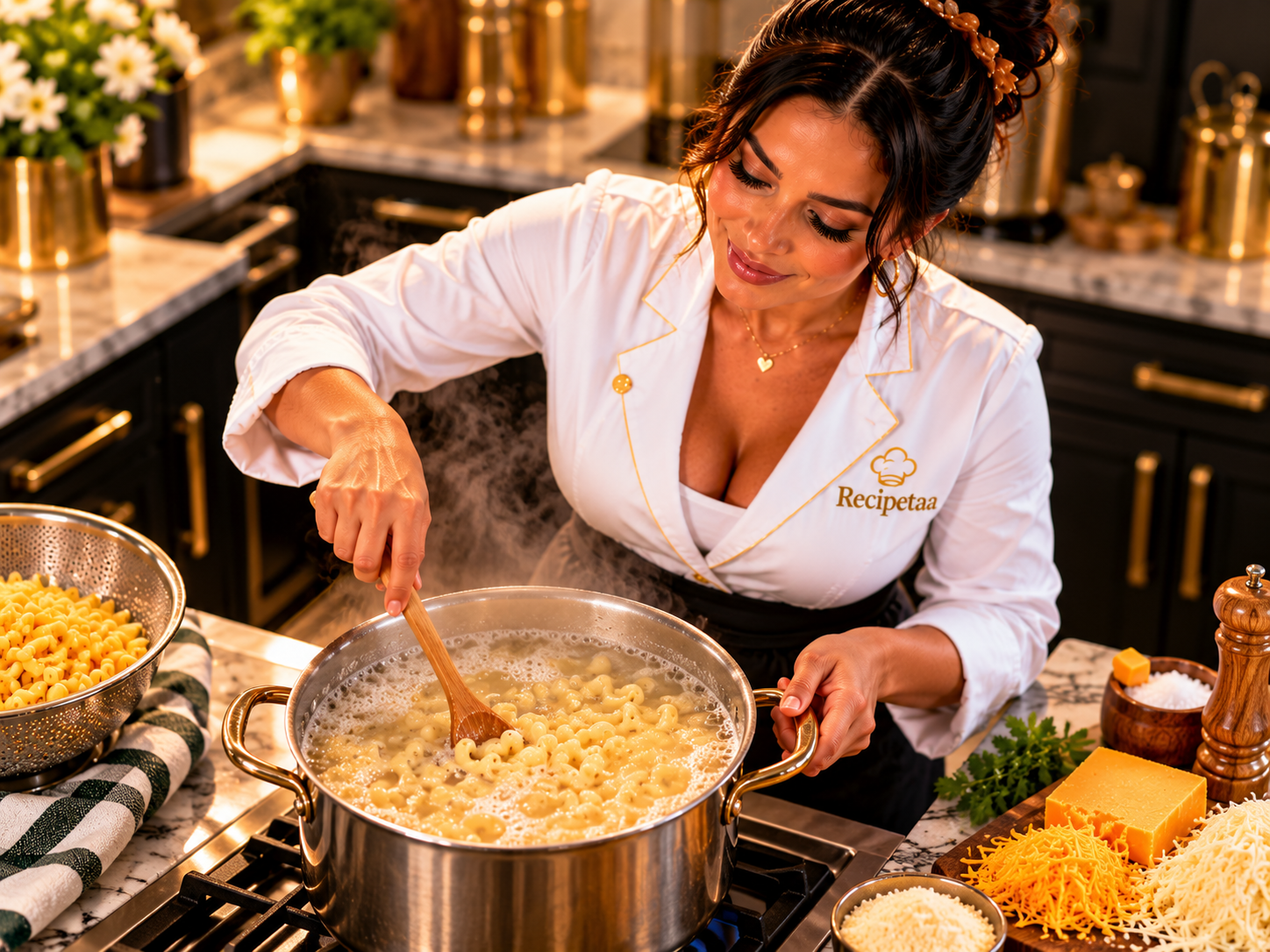
Baked mac and cheese cooks the pasta twice, so it should retain structure after boiling.
Step 2 — Make the Roux
- Melt butter in a large saucepan over medium heat.
- Whisk in flour until smooth.
- Cook about 1½–2 minutes, just until the raw flour smell disappears and the roux remains pale to lightly golden.
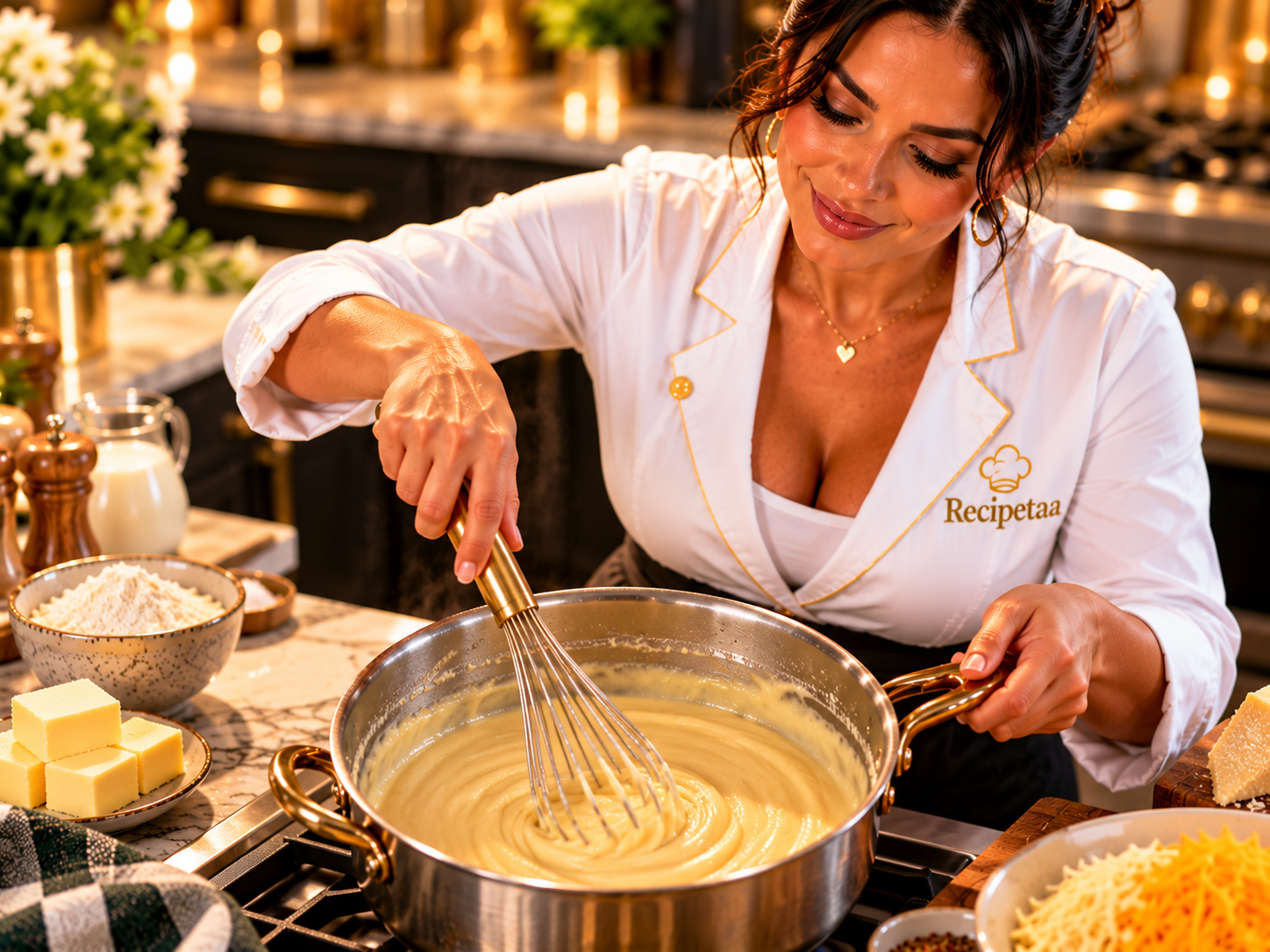
Do not rely on a long fixed cooking time. Reviews of this recipe include reports of flour browning or burning when the roux was cooked too long.
Step 3 — Add the Milk Gradually
- Slowly pour warm milk into the roux while whisking.
- Add Dijon mustard, garlic powder, paprika, salt, pepper and optional cayenne.
- Whisk until smooth and lightly thickened, about 5–7 minutes.
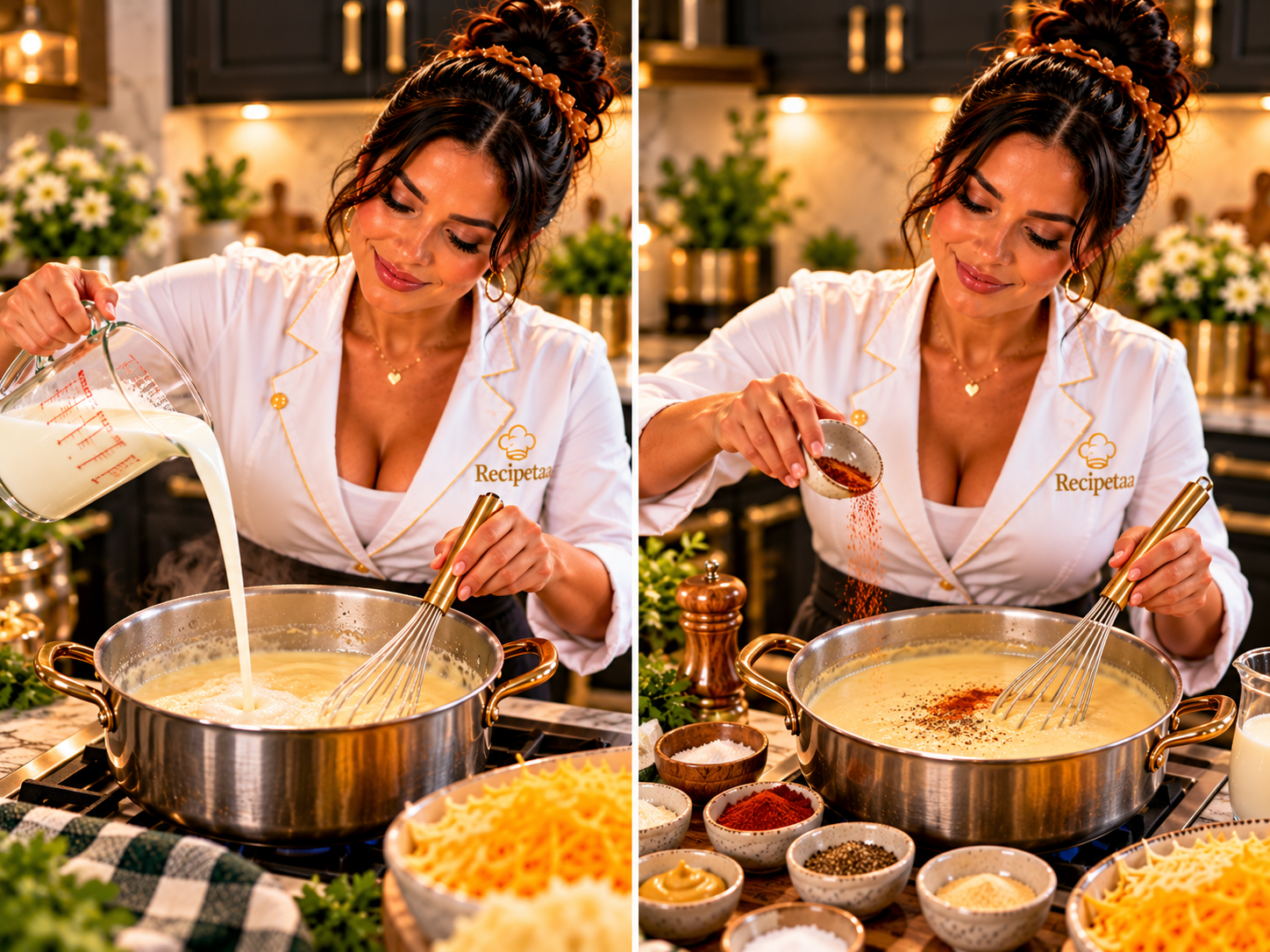
The sauce should coat a spoon but still be noticeably looser than the final baked texture.
Step 4 — Add the Cheese Off the Heat
- Remove the saucepan from direct heat.
- Add cheddar and Gruyère in several additions, whisking gently until melted.
- Stir in Parmesan.
- Taste and adjust seasoning.
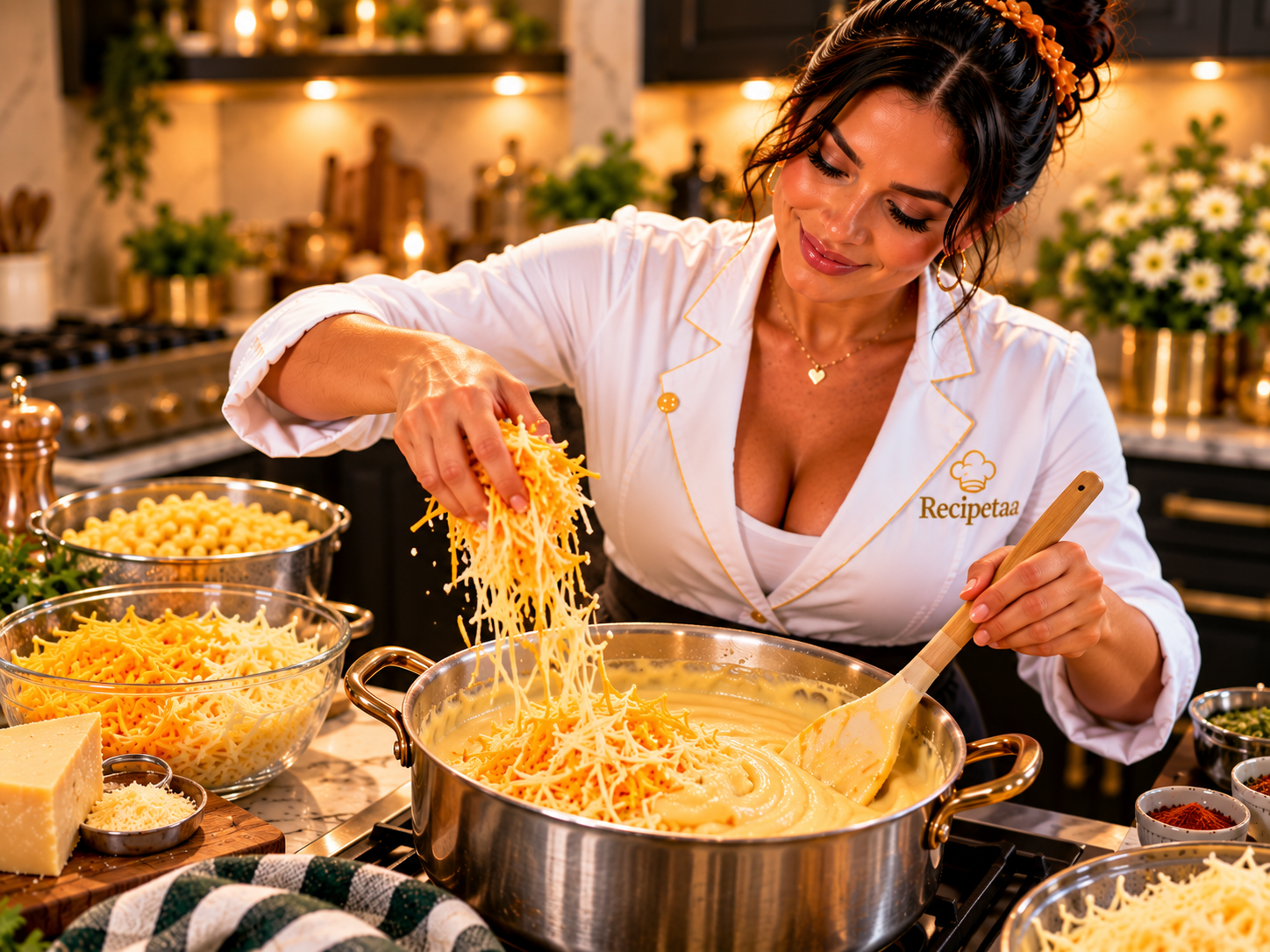
Adding the main cheese off direct heat reduces the risk of overheating the dairy and helps maintain a smoother sauce.
Step 5 — Combine Pasta and Sauce
- Add drained macaroni to the cheese sauce.
- Fold gently until every noodle is coated.
- Keep the mixture slightly saucier than the finished texture you want.
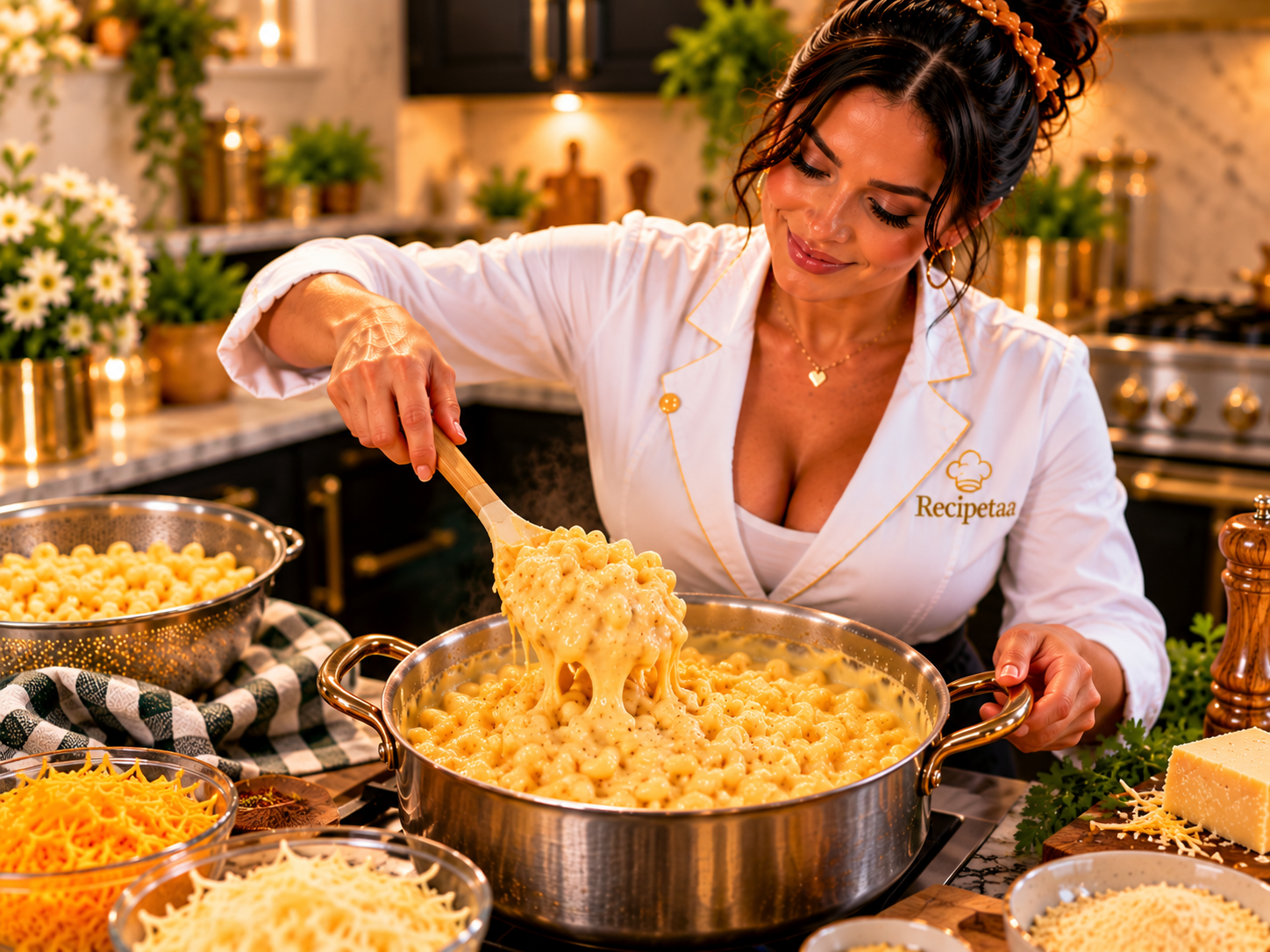
This is intentional because pasta continues absorbing moisture in the oven, so an already-thick sauce can produce dry mac and cheese.
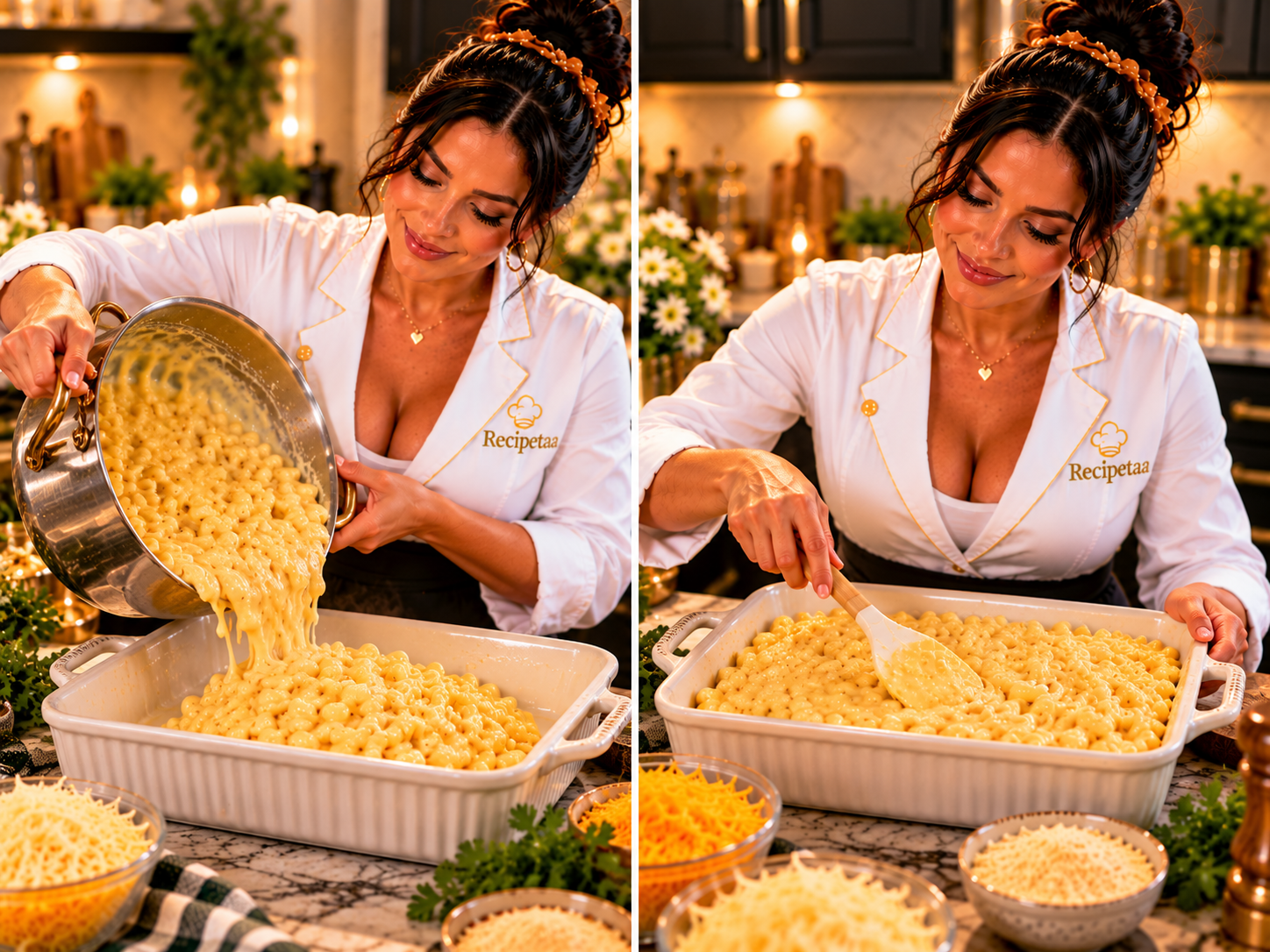
Step 6 — Transfer to the Baking Dish
- Lightly butter a 9-by-13-inch baking dish.
- Pour in the macaroni and cheese.
- Spread evenly.
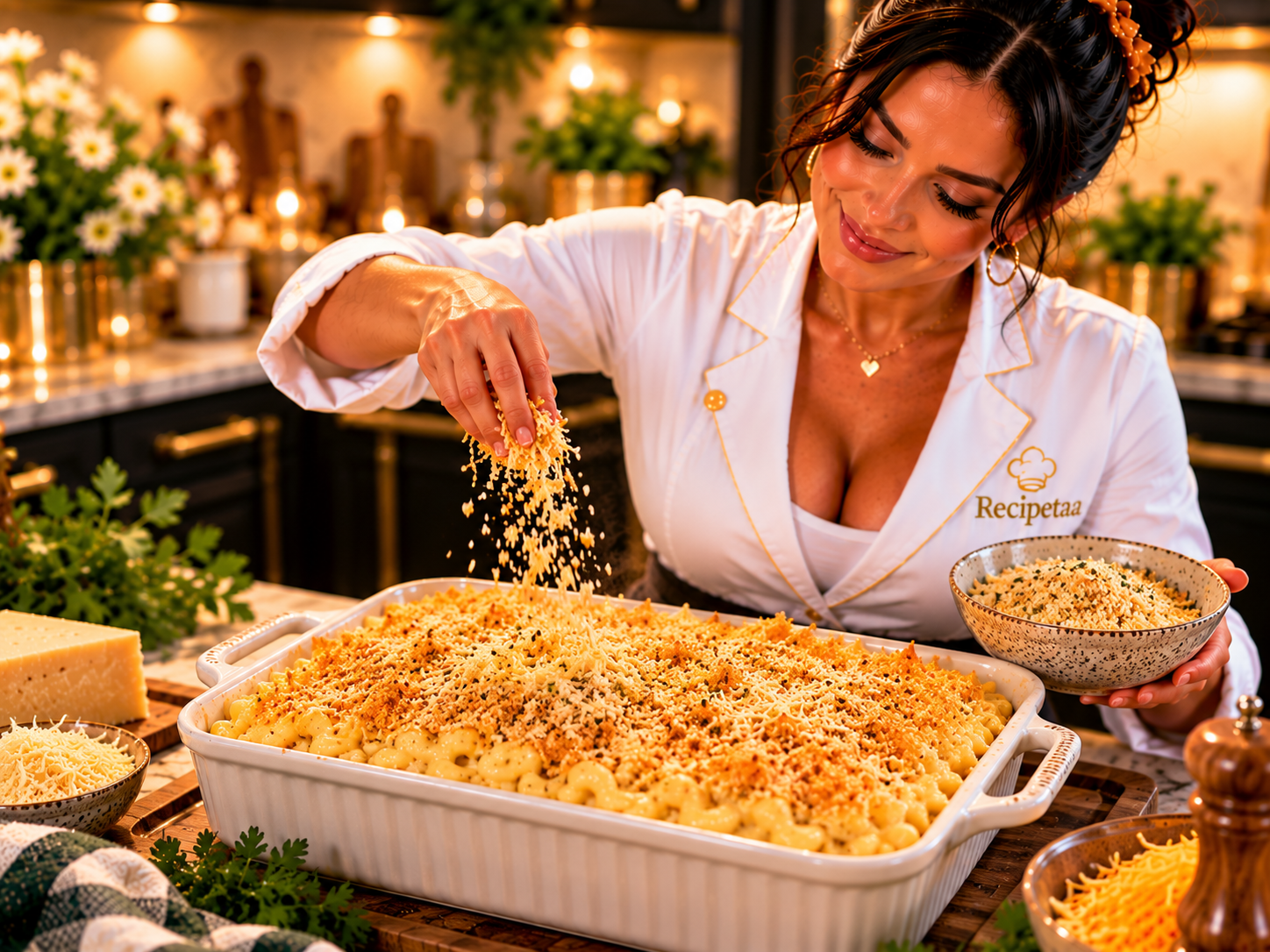
Step 7 — Add the Golden Panko Topping
- Mix panko, melted butter, Parmesan and a pinch of salt.
- Scatter evenly over the casserole.
Step 8 — Bake Until Bubbling and Golden
- Heat oven to 375°F (190°C).
- Bake 20–25 minutes until bubbling at the edges and golden on top.
- If topping browns too quickly, loosely cover with foil.
- Do not overbake.
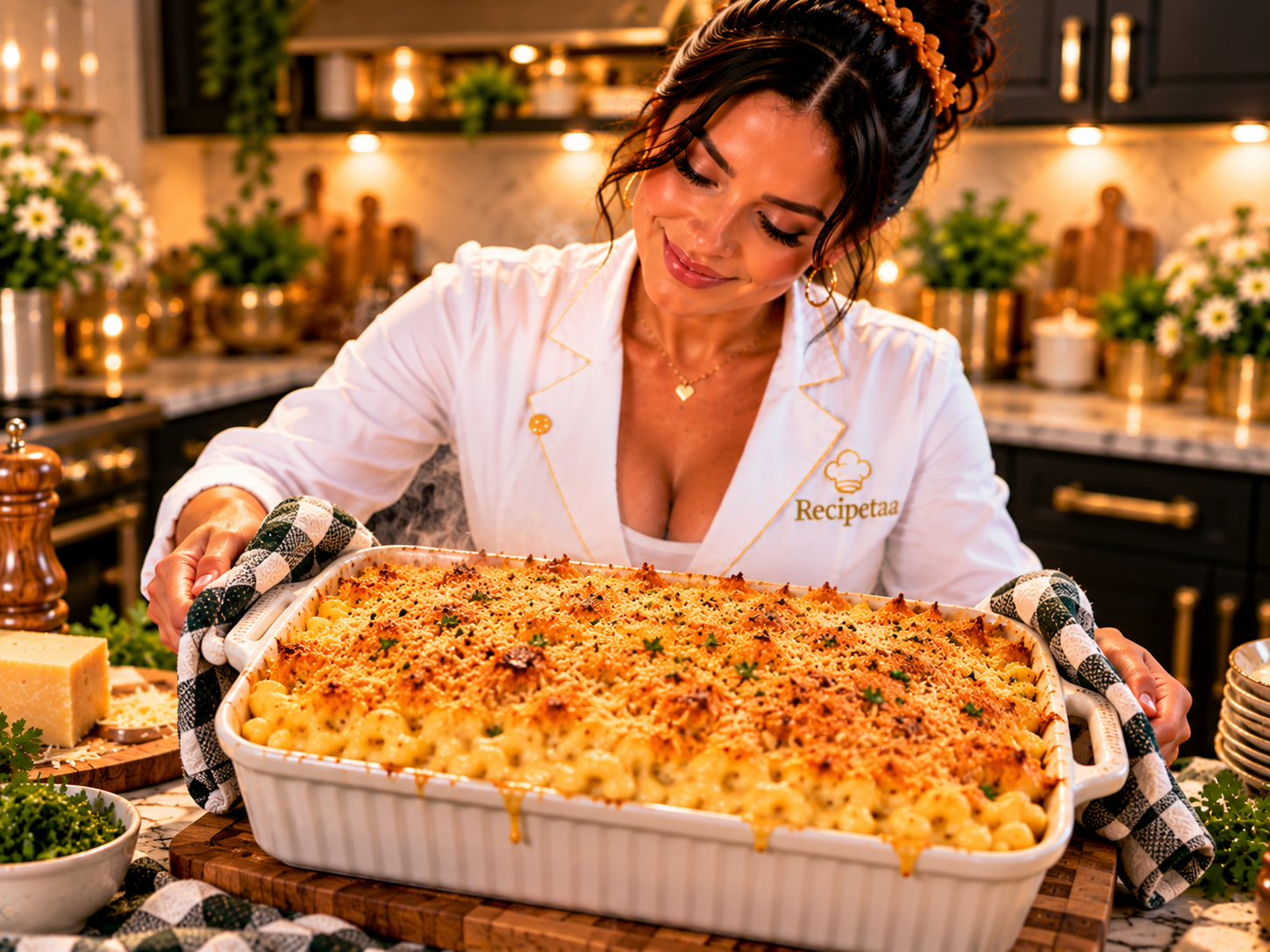
Bake time varies with dish depth and starting temperature, so use bubbling edges and a golden topping as the primary visual cues.
Step 9 — Rest Before Serving
- Rest 8–10 minutes.
- Serve while the center remains creamy.

A short rest lets the sauce settle without leaving the casserole in the hot oven long enough to dry.
How to Make Macaroni and Cheese Creamy
- Use enough sauce for the pasta.
- Cook pasta only to al dente.
- Keep the béchamel loose before baking.
- Use freshly grated cheese.
- Add cheese off direct heat.
- Avoid boiling the finished cheese sauce.
- Keep the oven stage controlled.
- Rest briefly rather than overbaking.
Why Is My Mac and Cheese Grainy?
Possible causes include overheating the cheese, using a cheese that does not melt smoothly, adding cheese to an excessively hot sauce, or allowing the sauce to separate.
Feedback from reviews includes repeated reports of gritty and granulated sauce.
- Remove sauce from direct heat before adding main cheese.
- Use freshly grated cheese.
- Add cheese gradually.
- Do not boil the sauce after cheese is added.
- Avoid excessive baking.
Why Is My Mac and Cheese Dry?
- Too much pasta relative to sauce.
- Sauce was too thick before baking.
- Overbaking.
- Too little sauce for the pasta.
- Drying during reheating.
For baked mac and cheese, the sauce should be looser before the oven because pasta continues absorbing moisture.
Why Is My Mac and Cheese Greasy?
Greasy mac and cheese usually means the fat and dairy have separated.
Avoid boiling the cheese sauce, use a balanced cheese-to-liquid ratio and incorporate the cheese gradually off heat. Excessive oven time can also cause cheese to release fat.
Why Is My Cheese Sauce Too Thick?
Whisk in a small amount of warm milk until the sauce flows easily around the pasta. Remember that it will thicken further during baking.
Why Is My Cheese Sauce Too Thin?
Let the béchamel base cook until it lightly coats a spoon before adding cheese. Do not dump extra flour into the finished cheese sauce. The pasta and oven stage will also contribute to thickening.
Why Did My Mac and Cheese Separate?
Very high heat can destabilize cheese sauces. Remove the sauce from direct heat before adding cheese and bake only until hot, bubbling and golden rather than continuing until the casserole is heavily browned.
Why Did My Mac and Cheese Become Hard After Cooling?
Cheese sauces naturally firm as they cool. Refrigeration makes this more noticeable. Reheat gently with a splash of milk and stop as soon as the center is hot.
Why Is the Top Burnt but the Middle Isn't Hot?
Bake on the middle rack and loosely cover with foil if the topping browns too quickly. A shallower dish will also heat differently from a deep casserole.
Why Does My Mac and Cheese Taste Bland?
Seasoning matters because a large amount of pasta and dairy can mute flavor. Salt the pasta water, season the sauce, use sharp cheddar and include mustard, pepper and paprika.
The supplied competitor reviews repeatedly describe the original version as bland. The goal is balanced savory flavor, not excessive heat.
What Is the Best Pasta for Mac and Cheese?
Elbow macaroni is the choice here because it is classic and gives the clearest match to the keyword. Shells, cavatappi, gemelli and small penne can also work.
Choose short shapes with enough surface area to hold sauce.
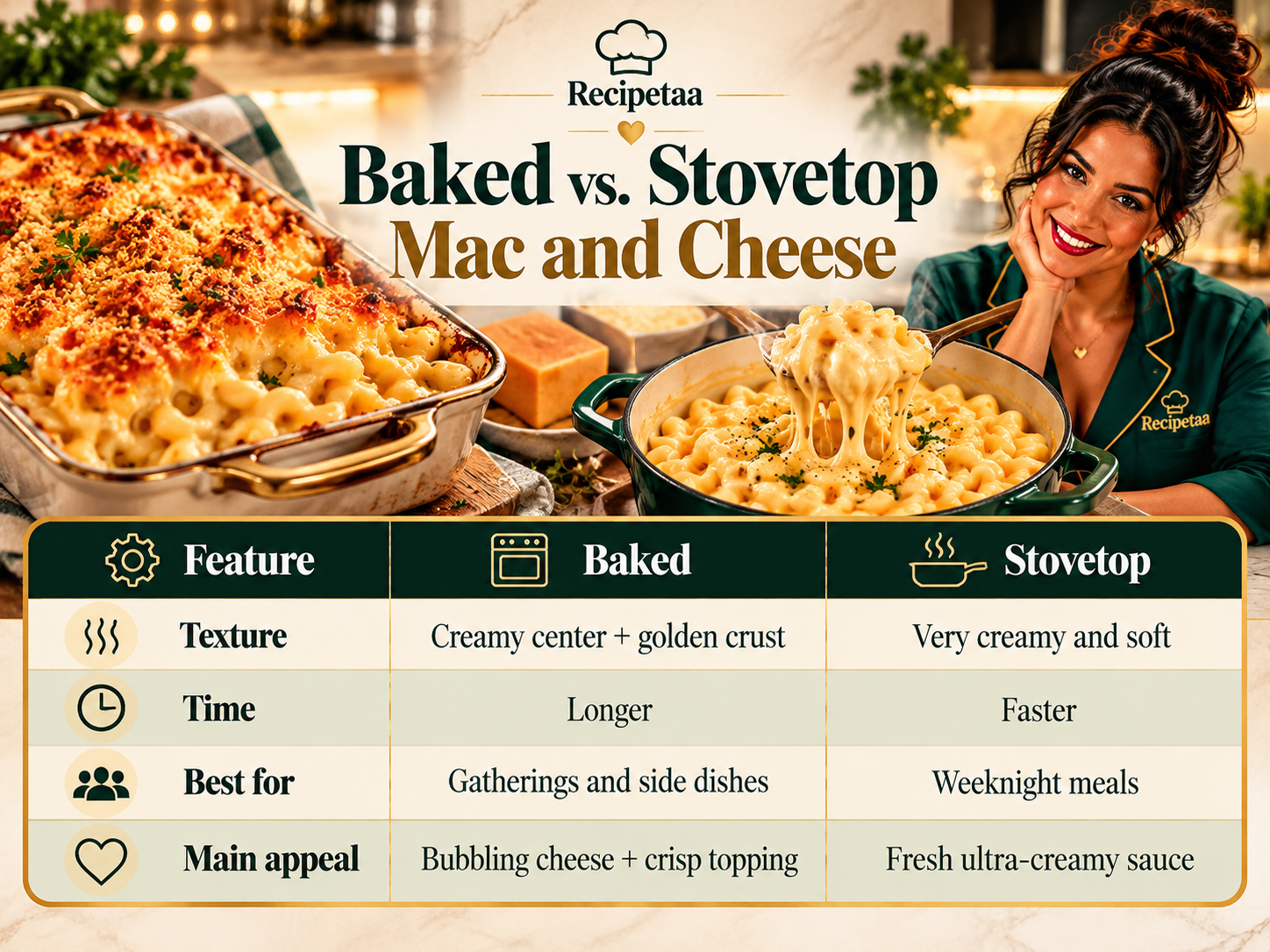
Baked vs. Stovetop Mac and Cheese
Can You Make Mac and Cheese Ahead of Time?
Yes. Assemble the pasta and sauce in the baking dish, cover and refrigerate, then bake when needed.
Add the panko topping shortly before baking when possible. If the casserole is very cold, allow additional baking time while watching the topping.
Can You Freeze Homemade Macaroni and Cheese?
Yes, although texture can become less creamy after freezing because pasta continues absorbing sauce and dairy sauces can change during freezing.
Cool, portion into freezer-safe containers and thaw in the refrigerator before reheating.
For a major gathering, fresh or short-term refrigerated preparation is preferable for the best texture.
How Do You Reheat Mac and Cheese Without Drying It Out?
- Add a splash of milk.
- Cover loosely.
- Use moderate heat.
- Stir gently when appropriate.
- Stop heating once hot.
Top chefs also recommends adding milk or cream during reheating.
How Long Does Homemade Mac and Cheese Last in the Refrigerator?
Refrigerate leftovers promptly in a covered container. USDA FSIS guidance generally recommends using refrigerated leftovers within 3–4 days and reheating leftovers to 165°F (74°C).
Can You Use Pre-Shredded Cheese?
Yes, but freshly grated cheese is preferred. Most chefs recommend shredding cheese yourself for baked mac and cheese.
Can You Use Different Cheeses in Mac and Cheese?
Yes. Combine cheeses with complementary flavor and good melting characteristics. Sharp cheddar and Gruyère are the combination here, with Parmesan used as a supporting cheese.
Recipe Variations
- Southern Baked Macaroni and Cheese: Develop as a separate recipe because its preparation identity can differ from this béchamel-based recipe.
- Creamy Stovetop Mac and Cheese: Faster and especially creamy.
- Three-Cheese Mac and Cheese.
- Jalapeño Mac and Cheese.
- Bacon Mac and Cheese.
- Broccoli Mac and Cheese.
- Buffalo Chicken Mac and Cheese.
A Few Words From Recipetaa
Great homemade macaroni and cheese is a balance between richness and restraint.
You want enough sauce to keep the pasta creamy, enough sharp cheese to make every bite flavorful, and just enough oven time to create a golden crust without drying the center.
Keep the sauce looser than the final texture you want, grate your cheese fresh, and let the oven finish the dish rather than cooking it to death.
That approach gives you a dependable baked macaroni and cheese recipe that is creamy underneath, golden on top and satisfying from the first bite.
Frequently Asked Questions
What is the best cheese for macaroni and cheese?
Sharp cheddar is the best starting point for classic flavor. Gruyère adds nutty depth and Parmesan adds savory finishing flavor.
How do you make macaroni and cheese creamy?
Use a smooth, moderately thick béchamel, freshly grated cheese, al dente pasta and a controlled bake. Keep the sauce loose before baking.
Should you use a roux for mac and cheese?
For this recipe, yes. The butter-and-flour roux provides structure for the béchamel cheese sauce.
Can you make mac and cheese ahead of time?
Yes. Assemble, refrigerate appropriately and bake later. Add the panko topping close to baking when possible.
Can you freeze homemade macaroni and cheese?
Yes, although the texture may be less creamy after thawing.
How do you reheat mac and cheese without drying it out?
Add a little milk and reheat gently.
Why is my mac and cheese grainy?
The cheese may have overheated or the sauce may have separated. Use freshly grated cheese and add it off heat.
Why is my mac and cheese dry?
Usually too much pasta, too little sauce or overbaking.
Can you use pre-shredded cheese?
Yes, but freshly grated cheese is preferred.
What pasta is best for mac and cheese?
Elbow macaroni is the classic choice, but shells and cavatappi also work.
Can you use different cheeses in mac and cheese?
Yes. Choose complementary cheeses that melt well.
Is baked or stovetop mac and cheese better?
Baked is best for a golden crust and gatherings, but stovetop is faster and especially creamy.
How long does homemade mac and cheese last in the refrigerator?
Generally 3–4 days when promptly refrigerated, according to USDA FSIS guidance.
Easy Macaroni and Cheese
Classic baked macaroni and cheese recipe with tender elbow pasta, sharp cheddar, Gruyère, Parmesan, and a golden buttery panko topping.
- Prep
- 20 min
- Cook
- 35 min
- Total
- 55 min
- Servings
- 8
- Difficulty
- Medium
- Cuisine
- American
Ingredients
- 1 lb elbow macaroni
- Kosher salt for pasta water
- 6 tbsp unsalted butter
- ¼ cup all-purpose flour
- 3 cups whole milk, warmed
- 1 tsp Dijon mustard
- ½ tsp garlic powder
- ½ tsp sweet paprika
- ½ tsp kosher salt
- ½ tsp black pepper
- ¼ tsp cayenne, optional
- 12 oz sharp cheddar, freshly grated
- 6 oz Gruyère, freshly grated
- 2 tbsp finely grated Parmesan for sauce
- 1 cup panko breadcrumbs
- 2 tbsp melted butter for topping
- 2 tbsp finely grated
- Pinch of salt
Method
- Cook pasta
Boil macaroni in salted water until just al dente; drain.
- Make roux
Melt butter, whisk in flour, and cook 1–2 minutes.
- Add milk
Gradually whisk in warm milk until smooth and lightly thickened.
- Season
Add Dijon, garlic powder, paprika, salt, pepper, and optional cayenne.
- Add cheese
Lower heat and stir in cheddar, Gruyère, and Parmesan until smooth.
- Combine
Fold pasta into sauce; keep sauce slightly loose before baking.
- Make topping
Mix panko, melted butter, Parmesan, and salt.
- Assemble
Transfer to greased baking dish and add topping.
- Bake
Bake at 350°F for about 20–25 minutes until bubbling and golden.
- Rest
Let stand briefly before serving.
Estimated nutrition per serving
- calories
- 500 kcal
- protein
- 25g
- carbs
- 55g
- fat
- 30g
Visit the recipe page for serving adjustments, saving, printing, and cooking tools.