Smothered Chicken Recipe | Southern Chicken with Rich Onion Gravy
This easy Southern-style smothered chicken recipe delivers deep savory flavor, silky gravy, and comforting one-skillet simplicity.

Why You’ll Love This Smothered Chicken
- Bone-in chicken thighs stay juicy and tender during the covered simmer.
- The chicken is lightly dredged in seasoned flour, giving it a flavorful browned exterior and helping thicken the gravy.
- The same skillet captures the browned bits from the chicken and turns them into a deeply savory onion gravy.
- The recipe uses familiar ingredients and one skillet, making it practical for a comforting family dinner.
- The finished chicken is tender enough to eat with a spoonful of gravy over mashed potatoes, rice, grits, or biscuits.
What Is Smothered Chicken?

Smothered chicken is a comfort-food preparation in which chicken is browned and then finished in a flavorful gravy or braising liquid.
The chicken and gravy cook together so the meat becomes tender while the sauce absorbs the savory flavor left in the skillet.
The exact recipe varies by cook and region. Some versions use chicken breasts, some use leg quarters or a whole cut-up chicken, and others use bone-in thighs.
This Recipetaa version focuses on bone-in, skin-on chicken thighs with seasoned flour and homemade brown onion gravy.
The technique is the important part. Make sure to brown the chicken, build flavor in the same skillet, make the gravy, then let the chicken finish cooking in that gravy.
What Does “Smothered” Mean in Smothered Chicken?
In this dish, “smothered” means the chicken is covered or nestled in a savory gravy and allowed to finish cooking in that sauce.
It is more than simply pouring gravy over cooked chicken. The gravy becomes part of the cooking process, while the chicken contributes browned flavor back to the sauce.
That is why browning the chicken first matters because the browned bits left in the skillet can be scraped up when stock is added, adding depth to the finished gravy.
This sear-then-finish technique is also reflected in current smothered chicken recipes.
Why Bone-In Chicken Thighs Work So Well
Bone-in thighs are a particularly useful cut for this recipe because they can handle the covered simmering stage without becoming as quickly overcooked as a very lean cut.
Current smothered chicken recipes use bone-in thighs, leg quarters, and other dark-meat pieces for similar braising-style preparations.
For this recipe, use bone-in, skin-on thighs when possible. The skin is browned first, while the meat finishes gently in the onion gravy.
Ingredients You’ll Need
- 6 bone-in, skin-on chicken thighs, about 3 to 3 1/2 pounds total
- 1 cup all-purpose flour, divided
- 2 teaspoons paprika
- 1 teaspoon garlic powder
- 1 teaspoon onion powder
- 1/2 teaspoon dried thyme
- 1 teaspoon kosher salt, plus more to taste
- 1/2 teaspoon freshly ground black pepper
- 2 tablespoons neutral cooking oil
- 2 tablespoons unsalted butter
- 2 large yellow onions, thinly sliced
- 3 garlic cloves, minced
- 3 cups low-sodium chicken broth
- 1 teaspoon Worcestershire sauce
- 2 tablespoons chopped fresh parsley, for serving
Low-sodium chicken broth gives you more control over the final seasoning. If your broth is already salty, taste the gravy before adding more salt.
How to Make Smothered Chicken
1. Pat the Chicken Dry and Season It
Pat the chicken thighs thoroughly dry with paper towels. Season both sides with salt and black pepper.
Drying the surface helps the chicken brown instead of steaming in the skillet.

2. Make the Seasoned Flour
In a shallow bowl, whisk together the flour, paprika, garlic powder, onion powder, and dried thyme. Reserve about 2 tablespoons of this seasoned flour for the gravy.
Dredge each chicken thigh lightly in the remaining flour, shaking off the excess. The coating should be thin rather than heavily breaded.

3. Brown the Chicken
Heat the oil in a large heavy skillet over medium-high heat. When the oil is hot, place the chicken thighs in the skillet skin-side down without crowding the pan.
Brown the chicken in batches if necessary. Cook until the skin and exterior are deeply golden, about 4 to 6 minutes per side. The chicken does not need to be fully cooked at this stage.
Transfer the browned chicken to a plate and leave the flavorful browned bits in the skillet.

4. Cook the Onions
Reduce the heat to medium and add the butter to the same skillet. Add the sliced onions and a small pinch of salt. Cook, stirring occasionally, until the onions are deeply softened and golden brown, about 8 to 12 minutes.
Add the minced garlic and cook for about 30 seconds, just until fragrant.
You do not need to caramelize the onions for nearly an hour for this version. The goal is deeply softened, browned onions that become part of the gravy while keeping the recipe practical for a weeknight dinner.

5. Build the Roux
Sprinkle the reserved seasoned flour over the onions. Stir continuously for about 1 minute so the flour coats the onions and cooks slightly.
The flour helps thicken the gravy. Cooking it briefly also reduces the raw flour taste.

6. Add the Chicken Broth Gradually
Slowly pour in the chicken broth while whisking or stirring constantly. Begin with a small amount, let it incorporate into the roux, then gradually add the rest.
Use a wooden spoon to scrape the browned bits from the bottom of the skillet. Those bits, often called fond, are packed with flavor.
Bring the gravy to a gentle simmer. The sauce should look smooth and lightly thickened rather than extremely thick.
Gradually incorporating broth is a useful technique for preventing a lumpy gravy.
Most chefs specifically recommends adding broth slowly and notes that a roux may look clumpy initially before smoothing as more liquid is incorporated.

7. Return the Chicken to the Gravy
Nestle the browned chicken thighs into the onion gravy, skin-side up. Spoon some onions and gravy around the chicken, but leave the browned skin exposed as much as possible.
Add any juices that collected on the plate back into the skillet.

8. Cover and Simmer Until Tender
Cover the skillet and reduce the heat to low or medium-low. Simmer gently until the chicken is cooked through and tender, about 25 to 35 minutes depending on the size of the thighs.
Use an instant-read thermometer to check the thickest part of the meat without touching the bone.
Chicken should reach at least 165°F (74°C) for safe consumption. Current smothered chicken recipes use 165°F as the doneness benchmark.

9. Finish and Serve
Taste the gravy and adjust the salt and black pepper as needed. Sprinkle with fresh parsley and spoon plenty of onion gravy over each chicken thigh.

How to Tell When Smothered Chicken Is Done
The most reliable method is an instant-read thermometer. Insert it into the thickest part of the thigh without touching the bone and make sure the temperature should reach at least 165°F (74°C).
You can also look for meat that is tender and cooked through, but color alone is not a reliable food-safety test. Use temperature as your final check.
Why You Should Brown the Chicken First
Browning gives the chicken a deeper savory flavor and leaves browned bits in the skillet that can be incorporated into the gravy.
The chicken does not have to be fully cooked during this first stage because it finishes cooking in the gravy.
Some chefs use a browning step before the chicken returns to the gravy or braising liquid.
How to Keep Smothered Chicken Tender
- Choose bone-in thighs for this version rather than combining several chicken cuts in one batch.
- Do not aggressively boil the gravy but keep it at a gentle simmer.
- Keep the skillet covered during most of the finishing stage so the chicken cooks gently in the gravy.
- Check the chicken with a thermometer rather than cooking for an unnecessarily long time.
- Let the chicken rest briefly in the gravy before serving so the sauce can coat the meat.
How to Avoid Lumpy Chicken Gravy
- Cook the flour briefly in the butter and onion mixture before adding broth.
- Add broth gradually while stirring or whisking.
- Scrape the skillet as you add liquid so the browned bits dissolve into the gravy.
- If the gravy thickens too quickly, lower the heat and add another splash of broth.
- Remember that the gravy thickens further as it simmers and cools.
A temporary clumpy appearance when liquid first hits the roux is not necessarily a problem.
Keep stirring and gradually putting in the remaining broth, making sure the mixture is smoothed out as the liquid is being poured in.
How to Thicken Smothered Chicken Gravy
The flour in the seasoned dredge and the reserved flour used in the roux provide the main thickening.
If the finished gravy is thinner than you want, remove the chicken temporarily and simmer the gravy uncovered for a few minutes, stirring occasionally.
Avoid adding a large amount of dry flour directly to finished gravy because it can create lumps.
If additional thickening is truly needed, make a small slurry with flour and cool water, whisk it smooth, then add it gradually.
What If the Gravy Is Too Thick?
Add chicken broth a little at a time and stir until the gravy reaches a spoonable consistency. Remember that the gravy should coat the chicken and sides without becoming paste-like.
How to Keep Chicken Gravy From Being Too Salty
- Start with low-sodium chicken broth.
- Season the chicken lightly at first because the gravy concentrates as it cooks.
- Taste before adding final salt.
- If the gravy becomes too salty, add unsalted broth or water in small amounts and adjust the consistency.
Can You Make Smothered Chicken With Chicken Breasts?
Yes. Chicken breasts are used in many smothered chicken recipes, but they cook differently from bone-in thighs.
If using breasts, avoid simply swapping them into this recipe without adjusting the cooking time.
Thin, evenly sized chicken breasts or cutlets generally need less simmering time than bone-in thighs.
For the hero recipe, keep bone-in thighs as written so the timing and texture remain consistent.
Can You Make Smothered Chicken With Boneless Chicken Thighs?
Yes. Boneless thighs can be used as a supporting variation. They usually need less cooking time than bone-in thighs, so begin checking them earlier with an instant-read thermometer.
Do not combine bone-in and boneless thighs in the same batch unless you are prepared to remove pieces at different times.
Can You Make Smothered Chicken in One Skillet?
Yes. That is one of the best features of this recipe. The chicken, onions, roux, broth, and gravy all use the same skillet, allowing the browned bits from the chicken to become part of the sauce.
A large cast-iron or heavy stainless-steel skillet works particularly well because it provides enough surface area for browning.
Can You Make Smothered Chicken on the Stovetop?
Yes. This recipe is designed for the stovetop. After the chicken is browned and the gravy is built, the chicken finishes in the covered skillet at a gentle simmer.
Some versions transfer the skillet to the oven for the finishing stage, while others remain entirely on the stovetop. Both approaches use the same basic smothering idea.
Can You Make Smothered Chicken in the Oven?
Yes. An oven-finished version can be prepared in an oven-safe skillet by building the gravy on the stovetop, returning the chicken to the pan, covering it, and baking until the chicken reaches 165°F. Some chefs use an oven finish in some of their smothered chicken versions.
For the simplest Recipetaa hero recipe, however, the stovetop method keeps the process straightforward.
What Does Southern Smothered Chicken Taste Like?
Expect a savory, deeply seasoned flavor with tender chicken, sweet-savory cooked onions, and a rich brown gravy.
The browned chicken and skillet fond provide the foundation, while garlic, paprika, thyme, and onion seasoning give the gravy its rounded flavor.
The finished dish is comforting rather than delicate, which is why it pairs so naturally with starches that can absorb the gravy.
What to Serve With Smothered Chicken
- Creamy mashed potatoes
- Steamed white rice
- Buttermilk biscuits
- Southern-style grits
- Green beans
- Collard greens
- Roasted carrots
- Cornbread
Rice and mashed potatoes are especially useful because they give the onion gravy somewhere to go.

Current Southern-style and smothered chicken recipes commonly pair the dish with rice, mashed potatoes, greens, or biscuits.
Can You Make Smothered Chicken Ahead of Time?
Yes. Smothered chicken is well suited to make-ahead meals because the chicken and gravy can be reheated together.
Cool the finished dish promptly, refrigerate it in a covered container, and reheat gently until hot throughout.
If the gravy thickens in the refrigerator, loosen it with a small splash of chicken broth while reheating.
How to Store Smothered Chicken
Refrigerate leftovers in an airtight container. Current recipes from popular chefs recommend using refrigerated leftovers within four days.
Reheat gently on the stovetop over medium-low heat, adding a splash of broth if the gravy has become too thick. Heat until the chicken is hot throughout.
Can You Freeze Smothered Chicken?
Yes. Cool the chicken and gravy completely, portion them into freezer-safe containers, and freeze. Thaw in the refrigerator before reheating.
The gravy may need a splash of broth when reheated to restore a smooth consistency.
For the best texture, avoid repeatedly freezing and thawing the same portion.
Common Mistakes to Avoid
- Crowding the skillet when browning the chicken.
- Leaving too much excess flour on the chicken.
- Adding broth too quickly to the roux without stirring.
- Burning the flour or onions while trying to make the gravy darker.
- Boiling the gravy aggressively while the chicken cooks.
- Using several different chicken cuts together without adjusting their cooking times.
- Relying only on appearance instead of checking the chicken's internal temperature.
- Adding final salt before tasting the finished gravy.
Smothered Chicken vs. Fried Chicken With Gravy
The two dishes overlap in ingredients and technique, but they are not necessarily the same.
Fried chicken is typically cooked until the exterior is crisp and the chicken is served with gravy separately or alongside it.
Smothered chicken is defined by the chicken finishing in the gravy, allowing the sauce to become part of the cooking process.
That distinction is why the hero recipe focuses on a browned, lightly dredged chicken thigh that is returned to the onion gravy to finish.
Recipe Variations
Boneless Chicken Thighs
Use boneless thighs for a faster version. Start checking for doneness earlier because they will cook more quickly than bone-in thighs.
Chicken Breasts
Use evenly sized chicken breasts or cutlets and adjust the cooking time. Avoid prolonged simmering, which can dry out lean breast meat.
Chicken Legs or Leg Quarters
Legs and leg quarters fit naturally into the same smothering technique. They may require a longer covered simmer depending on size.
Spicier Southern-Style Gravy
Add a small amount of cayenne pepper or Creole seasoning to the seasoned flour. Keep the amount modest so the onion gravy remains the dominant flavor.
Creamier Gravy
For a creamier variation, a small amount of cream or half-and-half can be incorporated after the chicken is cooked. This changes the recipe from the classic brown onion gravy, so treat it as a variation rather than part of the hero method.
Recommendations from Recipetaa
This Southern-style smothered chicken is all about building flavor in layers.
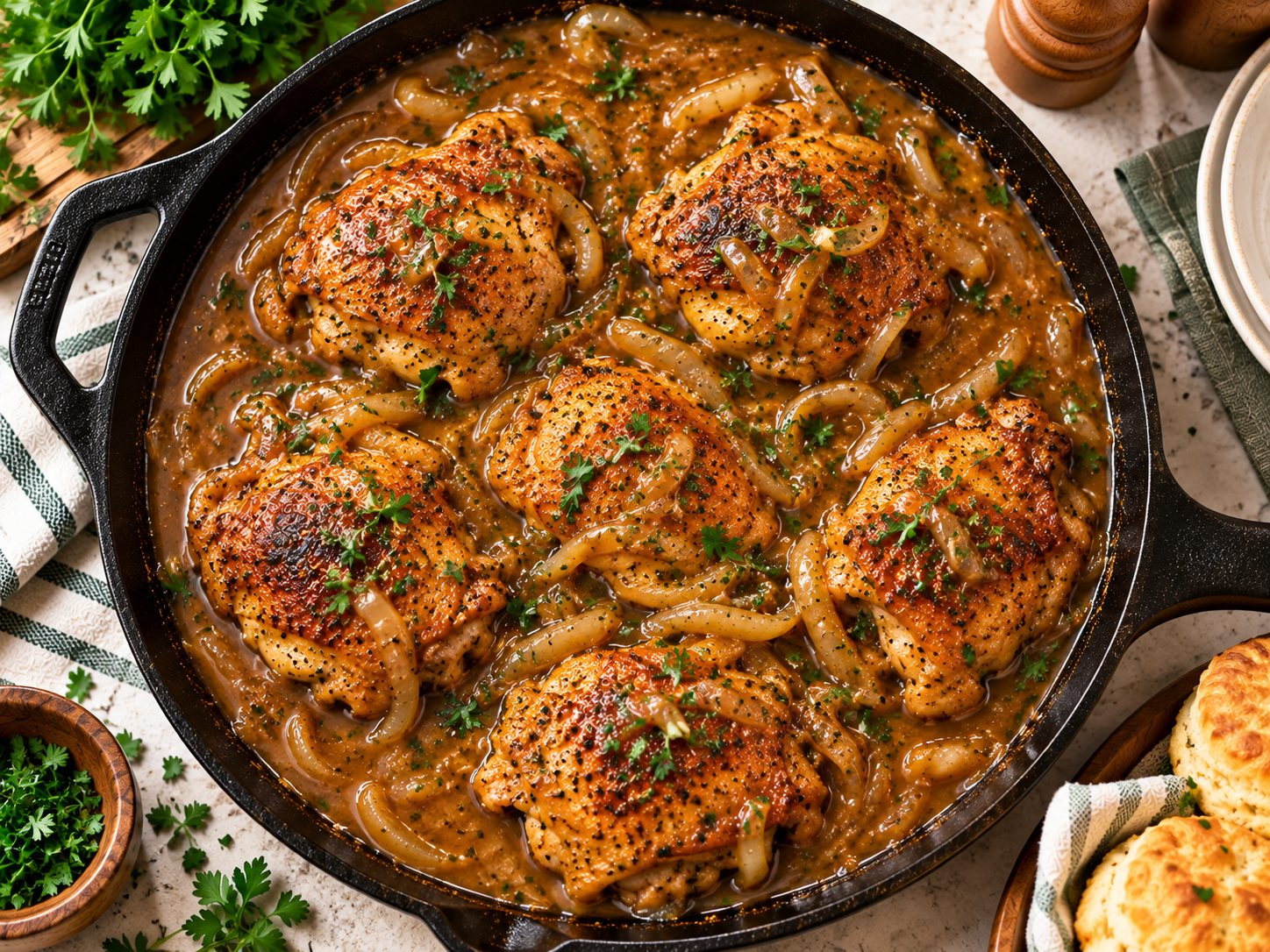
So, make sure to season the chicken, brown it well, soften the onions, build a smooth roux, deglaze with chicken broth, and let the chicken finish gently in the gravy.
The result is tender chicken with a rich onion sauce that turns a simple skillet dinner into serious comfort food.
For the best result, don't rush the browning or the gravy. Those two stages create the flavor that makes this smothered chicken recipe worth repeating.
Frequently Asked Questions
How do you make smothered chicken?
Season and lightly flour bone-in chicken thighs, brown them in a skillet, remove them, cook the onions, build a flour-based roux, add chicken broth, then return the chicken and simmer covered until tender and cooked through.
What chicken is best for smothered chicken?
For this recipe, bone-in, skin-on chicken thighs are the best fit because they provide rich flavor and hold up well during the covered simmer.
How long do you cook smothered chicken?
For bone-in thighs, plan on roughly 25 to 35 minutes of covered simmering after the gravy is made, depending on the size of the pieces.
Use an instant-read thermometer and cook until the thickest part reaches at least 165°F.
Should you flour chicken before smothering?
A light flour coating is useful because it helps brown the chicken and provides flour that can be reserved for thickening the onion gravy. It is not meant to be a thick fried-chicken breading.
Why is my smothered chicken gravy too thin?
It may need more gentle simmering to reduce and thicken. If necessary, remove the chicken and reduce the gravy briefly, then return the chicken to the pan.
Why is my chicken gravy lumpy?
The roux may not have incorporated the broth evenly. Add liquid gradually while whisking or stirring and scrape the bottom of the skillet as you go.
A roux can look clumpy at first but should smooth out as more liquid is incorporated.
Can I use a cast-iron skillet?
Yes. A large cast-iron skillet is well suited to this recipe because it provides a broad cooking surface for browning and can retain heat well. A heavy stainless-steel skillet also works.
Is smothered chicken the same as chicken and gravy?
They are closely related, but “smothered chicken” specifically emphasizes the chicken being finished or braised in the gravy. Individual chicken-and-gravy recipes can use different cooking methods.
Smothered Chicken
Golden bone-in chicken thighs simmered in a rich homemade onion gravy made from browned bits, softened onions, seasoned flour, and chicken stock.
- Prep
- 15 min
- Cook
- 55 min
- Total
- 70 min
- Servings
- 6
- Difficulty
- Medium
- Cuisine
- Southern American
Ingredients
- 6 bone-in, skin-on chicken thighs
- 1 cup all-purpose flour, for dredging and gravy
- 1 teaspoon paprika
- 1 teaspoon garlic powder
- 1 teaspoon onion powder
- 1 teaspoon dried thyme
- 1 teaspoon salt, plus more to taste
- ½ teaspoon black pepper, plus more to taste
- 2 tablespoons neutral cooking oil
- 2 tablespoons unsalted butter
- 2 large yellow onions, thinly sliced
- 3 garlic cloves, minced
- 3 cups low-sodium chicken broth
- 1 teaspoon Worcestershire sauce
- Chopped fresh parsley, for serving
Method
- 1. Season the chicken
Pat the chicken dry and season all over with paprika, garlic powder, onion powder, thyme, salt, and pepper.
- 2. Dredge
Lightly coat the chicken in seasoned flour and shake off the excess.
- 3. Brown the chicken
Heat oil in a large skillet and brown the thighs for about 4–6 minutes per side. Transfer to a plate.
- 4. Cook the onions
Add butter and sliced onions to the skillet and cook until deeply softened and lightly golden, about 8–12 minutes.
- 5. Add the garlic
Stir in minced garlic and cook briefly until fragrant.
- 6. Build the roux
Sprinkle in the remaining flour and stir until it is absorbed and lightly cooked.
- 7. Make the gravy
Gradually whisk in the chicken broth and Worcestershire sauce, scraping up browned bits from the skillet.
- 8. Return the chicken
Nestle the browned thighs into the gravy.
- 9. Simmer
Cover and simmer gently for about 25–35 minutes, until the chicken is tender and reaches 165°F internally.
- 10. Finish and serve
Taste the gravy for seasoning, garnish with parsley, and serve hot.
Estimated nutrition per serving
- calories
- 430 kcal
- protein
- 35g
- carbs
- 18g
- fat
- 25g
Visit the recipe page for serving adjustments, saving, printing, and cooking tools.